

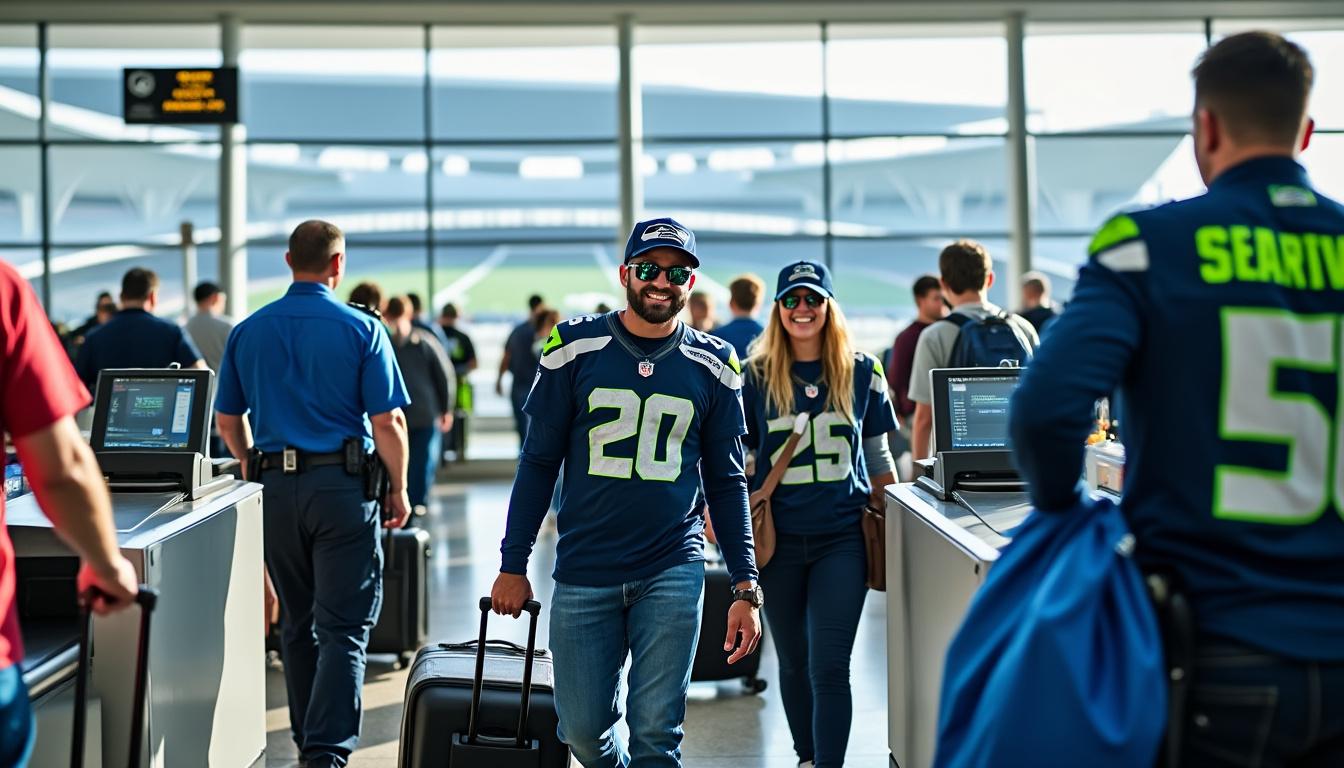
Preparing at Seattle-Tacoma: TSA and Airport Security Guidance for Seahawks Fans Heading to Super Bowl LX
Travelers leaving from Seattle-Tacoma International Airport should expect an uptick in passenger flow tied to the big game. Normally handling about 45,000 passengers per day this time of year, SEA anticipates higher volumes that can climb toward 54,000 daily travelers in the days before Super Bowl LX. That surge transforms routine airport navigation into a coordinated operation that rewards advance planning and calm efficiency.
Fans who travel with the purpose of celebrating a championship run need to align expectations with practicality. Security screening at checkpoints will follow standard federal procedures, but the sheer numbers will stretch queueing and processing times. The Transportation Security Administration (TSA) urges arriving at least two hours before scheduled domestic flights to reduce stress and avoid last-minute scrambles.
What to bring to the TSA checkpoint
Identification remains central to the security flow. Travelers should ensure they have an acceptable form of ID — the REAL ID or other TSA-approved documents — readily available when approaching the checkpoint. Optional identity verification via the modernized TSA ConfirmID program is available for a fee for those who need alternative verification, but most fans will not require it.
Carry-on packing plays a pivotal role in speed through screening. The familiar 3-1-1 liquids, aerosols and gels rule still applies: containers of 3.4 ounces (100 milliliters) or less, placed in a single quart-sized plastic bag, one bag per traveler. Anything larger that can be poured or sprayed should occupy checked luggage.
Practical airport-security habits for sports fans
Routine habits that shave minutes off screening times include organizing devices and liquids beforehand and keeping belts and metal accessories minimal. Travelers can now keep shoes on in many U.S. checkpoints, a convenience that simplifies the process for large crowds of sports fans traveling in team attire. Devices such as laptops and large electronics may still require removal depending on screening lanes, so a discrete backpack layout helps.
The TSA provides digital tools to avoid confusion. The MyTSA app includes the “What Can I Bring?” feature, and assistance channels like AskTSA via text or social platforms answer item-specific questions. These resources are particularly valuable for fans buying Super Bowl memorabilia and wondering which items fit in a carry-on.
A small illustrative anecdote: a Seattle fan group called the 12s Travel Club coordinated departure times and arrival windows for their flights. By spacing members’ arrival times and designating a luggage captain to manage team gear, the group kept bottlenecks to a minimum and moved through checkpoints more smoothly than ad hoc arrivals would have.
To keep pace with the elevated traffic tied to Super Bowl travel demand, arriving early, organizing ID and liquids, and leveraging TSA tools translate directly into time saved and a calmer journey to the stadium. Those steps form a reliable baseline for arriving at the airport prepared and confident.
Packing Smart for Super Bowl LX: Souvenirs, Carry-Ons, and Game Day Essentials
Packing for a destination such as Levi’s Stadium requires balancing fan gear, souvenirs, and the constraints of airport security. Clear rules govern what can cross TSA checkpoints and what must ride in checked baggage. Understanding those boundaries allows Seahawks fans to maximize the memorabilia they bring home without jeopardizing gate arrival times or risking confiscation.
Souvenir policies are notably generous for non-liquid items. Items such as programs, hats, jerseys, helmets, pennants, and rally flags are typically allowed in both carry-on and checked luggage. Empty metal beer cans and many plastic cups with event logos are also acceptable in both carry-on and checked bags.
Alcohol and liquid souvenirs — rules fans often miss
Souvenirs containing liquid—such as beer cans filled at the event—are subject to standard liquid rules when in carry-on bags. To avoid confiscation at the checkpoint, fans should pack any liquid souvenirs with contents in checked luggage. The 3-1-1 rule applies strictly to carry-ons, which means fluids over 3.4 ounces must be checked.
Another practical example: a fan returning home with a collectible beer can that still contains beer realized at security that it needed to be checked. Repacking at the checkpoint is possible but costly in time and stress, so pre-planning where to place liquid souvenirs saves both.
Packing checklist and carry-on recommendations
Fans should prioritize essentials for the flight and game day: travel documents, phone chargers, a compact team scarf or jacket, medications, and a small emergency kit. Breathable layers are recommended for the Bay Area’s variable February weather, and waterproof shell layers can be useful if rain threatens.
- Carry-On Essentials: ID, boarding pass, phone charger, small electronics, game program, spare team T-shirt.
- Checked Bag Items: Large liquids, bulk souvenirs with liquid, extra footwear, larger memorabilia that might produce delays at security.
- Security Tools: Quart-sized bag for 3-1-1 liquids, a list of meds, and the MyTSA app for last-minute checks.
The following table provides quick reference for common Super Bowl souvenir types and recommended packing options.
| Item | Carry-On Allowed? | Recommendation |
|---|---|---|
| Event program | Yes | Keep in an easy-access pocket for flight photos and autographs |
| Empty metal collectible can | Yes | Carry-on is fine, but protect from dents |
| Full beer can | No for carry-on | Pack in checked baggage, cushion to avoid leakage |
| Team helmet or large merchandise | Depends on size | Check with airline; often better checked |
For fans seeking additional guidance related to packing strategies and efficient flying, resources such as expert articles on smooth flying provide practical tips on minimizing bottlenecks at security and inflight organization. A helpful primer on efficient boarding and carry-on tactics is available in long-form travel advice that emphasizes streamlined packing and proactive checkpoint behavior via smooth flying travel tips.
Clear labeling of checked items and a small inventory list inside luggage can prevent lost-item hassles. The key takeaway is simple: separate what must go into a checked bag and what can stay with the traveler to preserve time and avoid last-minute surprises. Fans who heed these distinctions will find the return journey as rewarding as the trip to Levi’s Stadium.
Booking Flights and Journey Logistics For Super Bowl LX: Timing, Airports, and Cost Strategies
Securing the right flights and selecting the best airport can be as strategic as game-day play-calling. Airlines often add extra flights or adjust schedules to accommodate a surge of sports fans after a team’s playoff success. With the Seahawks’ berth in Super Bowl LX, many carriers increased capacity on routes from the Pacific Northwest to the Bay Area. That created options but also prompted price surges for last-minute bookings.
The general travel playbook: book early when possible; if travel was delayed, monitor airline releases for added flights and use fare-alert tools. For families or groups traveling together, block seats early to keep everyone on the same itinerary and reduce the risk of separated connections.
Which Bay Area airport to choose?
Levi’s Stadium sits in Santa Clara, part of the greater Bay Area transportation network that includes San Francisco International (SFO), Oakland (OAK), and Norman Y. Mineta San Jose International (SJC). Proximity to Levi’s Stadium makes SJC the most convenient for minimizing local transit time, while SFO and OAK may offer more flight options and potentially lower fares.
Factors to weigh include ground transfer times, shuttle availability, and local traffic. If lodging is booked in San Francisco, allow for longer commutes and coordinate transit windows carefully. Fans staying in Santa Clara or nearby are rewarded with shorter commutes and more predictable game-day transit.
Case study: the 12s Travel Club itinerary choices
The 12s Travel Club example helps illustrate decisions. Two members chose SJC for a direct shuttle to their hotel, cutting local transit time by nearly an hour. Others found better prices at SFO but scheduled earlier flights and reserved a shared ride to avoid peak traffic. The club’s travel coordinator recommended arriving at the departure airport with extra buffer time to account for increased security lines and possible weather-related delays.
Additional resources on navigating the greater Bay Area offer context on local transit and parking strategies, which are invaluable for planning arrival and departure logistics. A concise guide to regional travel tips is available for those who want to optimize hotel and ground transport choices via greater Bay Area tips.
Budget strategies include mid-week travel to avoid weekend surcharges, exploring nearby regional airports for better deals, and considering refundable fares if plans might shift post-game. Each decision affects the overall journey in tangible ways—cost, convenience, and stress levels.
Fans should also remember that night-before flights or early-morning departures can reduce the chance of travel disruptions caused by postgame congestion. The insight to carry forward: align airport choice and flight timing with lodging and ground transport to create a cohesive travel timeline that safeguards the fan experience.
Game Day Travel: Transport Options, Stadium Access, and Exit Strategies for Super Bowl LX
Game day logistics demand a refined approach: routes, timing, and contingency plans should be set before leaving lodging. Levi’s Stadium invites tens of thousands of fans, and efficient transit planning is essential to avoid long delays in ingress and egress. The stadium’s South Bay location changes how fans approach arrival and departure compared with central San Francisco events.
Public transit options include Caltrain, VTA light rail and shuttle services tied to the stadium. For many, rail connections to the stadium area are the most reliable choice, especially when paired with timed shuttle services that reduce the need to park near the venue. Dedicated fan shuttles and event-specific transit services often require pre-purchase or timed reservations to ensure space.
Tailgating, stadium entry, and security considerations
Levi’s Stadium enforces clear entry policies. Tailgating rules, bag policies, and prohibited item lists are published ahead of the event. Fans should arrive with tickets and IDs easily accessible. Coordination within traveling groups—deciding a meeting point, establishing a check-in call time, and allocating responsibilities for holding group items—makes moving from transit to seats more efficient.
For wheelchair users and those with mobility needs, the stadium typically offers accessible entry points and ADA-compliant transportation options. Fans requiring assistance should contact their point of sale or the stadium ahead of time to confirm arrangements and receive tailored arrival instructions.
Postgame exit: how to avoid bottlenecks
Excess congestion after the final whistle is inevitable. Strategies that reduce exit time include staggering departures (waiting 10–30 minutes after the event to let initial crowds disperse), prearranging pick-up points away from immediate egress zones, and selecting transit stops that avoid primary vehicle flows. Shared ride pickups often have designated areas that move faster than curbside waits in heavy traffic.
Here is a compact checklist for game-day travel:
- Pre-arrival: Confirm transit schedules and shuttle pick-up locations.
- At the stadium: Keep ID, tickets, and a small carry-on organized for quick screening.
- Postgame: Delay exit slightly to avoid the initial crowd surge or use designated shuttle lines.
Fans who integrate these tactics into their game-day plan reduce time spent in queues and increase the quality of the overall experience. Planning the last mile of the journey is as important as the flight in ensuring a winning trip home.
Travel Safety and Health For Sports Fans: Crowd Management, Weather, and Contingency Planning
Safety is a cornerstone of any successful trip. For Seahawks fans making the cross-country journey to Super Bowl LX, combining personal preparedness with awareness of venue procedures creates a resilient travel plan. A few core safety practices mitigate typical event-related risks.
First, stay informed about local weather and road conditions. February in the Bay Area can present variable weather; a lightweight waterproof layer and sturdy footwear are useful. For those driving segments or planning scenic detours, state travel resources and highway safety tips can prove invaluable when conditions shift unexpectedly.
Second, a simple medical kit and a short list of emergency contacts improve response time should a minor incident occur. Include prescription meds in carry-ons, supply antiseptic wipes, adhesive bandages, and a compact first-aid guide. Fans with specific medical needs should register access requirements with travel companions and venues as needed.
Crowd safety and personal security
In high-density events, maintaining situational awareness matters. Avoid displaying large amounts of cash, keep valuables secure and close to the body, and consider travel insurance that covers trip interruption and baggage loss. When traveling in groups—like the fictional 12s Travel Club—assign a small leadership team to monitor group members and account for everyone at key checkpoints.
Digital tools support safety. Confirmed itineraries shared with a trusted contact provide a remote check-in mechanism, and airline alerts keep travelers apprised of schedule shifts. The TSA’s AskTSA channels and the MyTSA app remain quick references for item-specific security questions and checkpoint expectations.
Dealing with delays and plan B options
Delays are part of travel, particularly around major events. Backup plans to consider include flexible hotel bookings, refundable fares where possible, and alternative routing through different Bay Area airports to reduce the risk of being stranded. For sports fans planning excursions before or after the game, having a few local options for activities can turn a delay into a memorable detour.
Practical daily checklist for travel safety:
- Share flight and lodging details with a trusted contact.
- Pack a small emergency kit and keep medications on the person.
- Review stadium safety policies and plan staggered exits.
- Monitor real-time travel alerts via airline apps and local transit feeds.
For guidance on weather impacts and highway advisories that may affect travel, regional travel safety resources offer targeted tips to navigate winter conditions and long-distance driving risks. Fans preparing for the trip can consult broader travel-safety articles that cover winter and highway concerns to refine contingency plans.
Ultimately, travel safety intertwines with the enjoyment of the event. When Seahawks fans pair sound preparation with practical contingency measures, the journey becomes a part of the celebration rather than a source of stress. That proactive stance is the clearest path to a safe and memorable Super Bowl travel experience.