

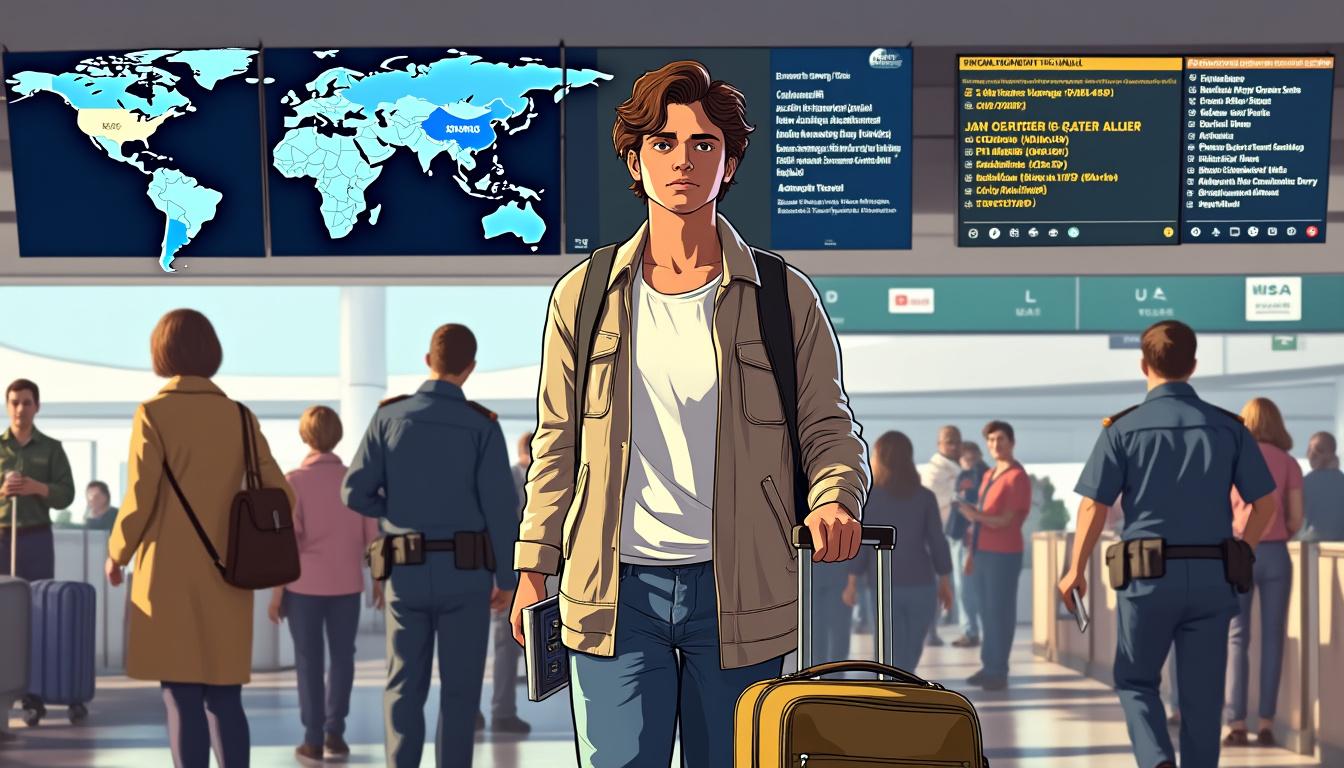
Airport departure boards can change faster than a carry-on zipper closes when fighting spreads across the Middle East. One day a route looks routine, the next it detours, delays, or disappears from sale. For Americans Abroad planning International Travel, the smartest move isn’t panic or bravado; it’s preparation built on official alerts, backup plans, and a clear head. The guidance below focuses on practical Travel Advice, from checking Travel Warnings to storing Emergency Contacts before wheels-up.
Essential Travel Advice Before Booking International Travel During Middle East Conflicts
Start with travel.state.gov, not social media clips or rumor-heavy group chats. The State Department keeps country pages with advisory levels, entry rules, visa information, health requirements, and updates from U.S. diplomats posted overseas. During Middle East Conflicts, conditions can shift by the hour, and a route that avoids one hotspot can still be affected by airspace closures hundreds of miles away.
Plenty of travelers make one bad assumption: if the destination isn’t in the fighting, the trip is untouched. That’s not how modern aviation works. Flights between North America, Europe, the Gulf, and parts of Asia often rely on regional corridors, so disruptions in Conflict Zones can ripple far beyond the map shown on a booking site.
Strong planning means checking three things before paying: the U.S. advisory for the destination, the airline’s change policy, and the transit rules for any connection point. A bargain fare with a harsh rebooking rule isn’t cheap if it strands a traveler in a transfer airport overnight. Aim for tickets with flexible change options, especially for routes crossing or skirting the eastern Mediterranean and Gulf region.
How Travel Warnings Should Shape Real Decisions
Travel Warnings are not background noise. They affect insurance validity, flight reliability, embassy workload, and on-the-ground support. If an advisory urges Americans to reconsider travel or leave a specific country, that is the moment to rethink the trip, not to search for one influencer saying everything felt fine last week.
Mignon Houston, speaking for the State Department, has pointed travelers back to official tools for a reason: destination-specific advisories, visa rules, vaccine information, and practical guidance from U.S. diplomats all sit in one place. That’s the useful stuff. Hot takes from strangers at Gate B12 aren’t.
One more hard truth: the most stressful travel day is often not departure but the day after a military strike, an airspace closure, or a retaliation cycle. Seats vanish, customer-service lines jam, and hotels near hubs fill fast. If a trip isn’t urgent, waiting for a steadier news cycle can save money and sleep by Tuesday afternoon.
Before moving from planning to packing, put official support in your pocket instead of hoping Wi-Fi will cooperate later.
Safety Tips For Americans Abroad: Register, Prepare, And Keep Emergency Contacts Ready
The best free tool many U.S. travelers still skip is STEP, the Smart Traveler Enrollment Program. It lets American citizens register a trip so embassies and consulates can send direct alerts if a security warning, evacuation update, or urgent advisory affects that location. In unstable periods, that message can matter more than any airline app notification.
Registration takes only a few minutes, and it creates a direct channel with U.S. officials abroad. That’s useful if plans unravel after arrival, but it’s even more useful before that point, when a sudden alert can push a traveler to change cities, shorten a stay, or avoid a connection entirely.
Every traveler should also save the phone number and address of the nearest U.S. embassy or consulate. If a passport is stolen, a wallet disappears, an assault occurs, or local police get involved, searching from memory while exhausted is a bad scene. Keep those details in a phone, a printed sheet, and an email sent to yourself.
- Enroll in STEP before departure and update it if hotels or cities change.
- Save Emergency Contacts for the nearest U.S. embassy or consulate, your airline, your insurer, and a trusted contact at home.
- Print copies of your passport ID page, visas, and travel insurance documents.
- Check airline alerts 24 hours before departure and again before heading to the airport.
- Carry backup payment in two separate places in case a card is blocked or stolen.
- Watch local news in English and local-language headlines for airport closures, curfews, and demonstrations.
What To Do If Something Goes Wrong Overseas
Bad moments abroad usually start small. A missing passport at check-in. A phone battery at 2 percent. A taxi dropping off at the wrong terminal as rumors spread about delays. That’s why Travel Precautions need to be boring and specific rather than dramatic.
If documents go missing, contact local police when required, then reach American Citizen Services at the embassy or consulate. If violence erupts near a hotel, stay indoors, monitor official channels, and avoid rushing into the street just because others are moving. Crowds aren’t a safety plan.
Some travelers build giant emergency folders and never look at them again. Better idea: keep a one-page note with names, booking references, blood type if relevant, medications, and embassy details. It should be readable in thirty seconds in an airport queue or a hospital waiting room around 11 p.m.
Preparation covers paperwork, but judgment on the ground matters just as much, especially when local tensions are high.
Travel Precautions In Conflict Zones And Nearby Transit Hubs
Not every risky trip heads straight into Conflict Zones. Many involve stopovers in cities that are functioning normally until they aren’t. That’s where calm travelers make better calls than reckless ones. A glamorous long layover loses its charm when airspace restrictions begin and every seat out is oversold.
Choose hubs with multiple daily departures if possible. Big airports with several airline alliances usually offer more recovery options than a single-carrier stop. If a connection through the Gulf, Levant, or eastern Mediterranean is unavoidable, leave more time between flights and avoid the last departure of the day.
Ground conditions matter too. Demonstrations can erupt near central squares, embassies, or major hotels after military actions or political speeches. A traveler doesn’t need to understand every slogan to know when to walk away. If streets look tense, shops are closing early, and police presence is thick, head back to the hotel and reassess after dark or the next morning.
| Situation | Best Immediate Move | Why It Helps |
|---|---|---|
| Flight canceled after airspace closure | Call airline and insurer at once | Fast action improves odds of rebooking before seats vanish |
| Unexpected protest near hotel | Stay inside and monitor official alerts | Street conditions can deteriorate faster than app maps update |
| Passport stolen abroad | Contact police and nearest U.S. consulate | Replacement documents often require both reports and identity proof |
| Missed connection due to security delays | Go to staffed transfer desk, not only the app | Agents can sometimes access protected inventory and hotel vouchers |
| Regional escalation in nearby country | Review advisory level and shorten flexible plans | Conditions in neighboring states can change within hours |
Why Flexible Routing Beats Optimism
Optimism is nice at a café. It is useless in a disrupted transit chain. Travelers heading to Europe, Africa, or Asia from the U.S. should compare alternate routings that avoid volatile air corridors, even if the ticket costs a bit more.
There is also a common mistake worth skipping: booking a separate self-transfer to save money. In stable periods it’s annoying; during Middle East Conflicts it’s a gamble. If the first flight is late and the second ticket is on another record, the airline may treat the missed connection as your problem and not theirs.
Smart routing looks less glamorous and works better. One record locator, longer connection time, and a daytime transfer beat a heroic dash through a chaotic airport at 1:20 a.m. in Doha, Amman, or Istanbul.
Cultural Awareness And Street-Level Judgment Matter As Much As Official Alerts
Cultural Awareness doesn’t solve geopolitical risk, but it does reduce avoidable trouble. In tense periods, loud political opinions, flag clothing, aggressive filming, or casual jokes about war can go down badly in airports, taxis, restaurants, and hotel lobbies. Respectful behavior isn’t performative politeness; it’s part of personal safety.
Dress codes also matter more than many Americans expect, especially when a trip includes conservative districts, religious sites, or smaller cities beyond major tourist zones. Travelers don’t need to erase their personality, but reading the room counts. A little restraint often keeps a day smooth.
Language helps too. Learn a few useful lines, keep translation apps downloaded for offline use, and know how to ask for police, hospital, or embassy directions. During disruption, the traveler who can communicate calmly has an edge over the one arguing in English at full volume.
Safety Tips That Work Better Than Fear
Fear makes people freeze or bolt. Neither works well. Better habits are quieter: keep chargers packed in hand luggage, carry a pen for forms, avoid posting real-time hotel locations, and tell a family member when moving between cities. Those habits sound dull until a border queue stalls and a phone dies.
A useful example is a traveler changing planes on the way to South Asia while news breaks of missile exchanges. The traveler who already downloaded boarding passes, embassy details, and offline maps can reroute with less chaos. The traveler who relied on airport Wi-Fi and screenshots from two days ago is now begging strangers for a charger near Gate C7.
For Americans Abroad, the strongest Travel Advice is rarely dramatic. Check official notices, prepare for disruption, keep Emergency Contacts within reach, and stay alert without spiraling. If the route still feels shaky after that review, postpone it and revisit the plan when flight paths and advisories settle a bit over the next few days.