

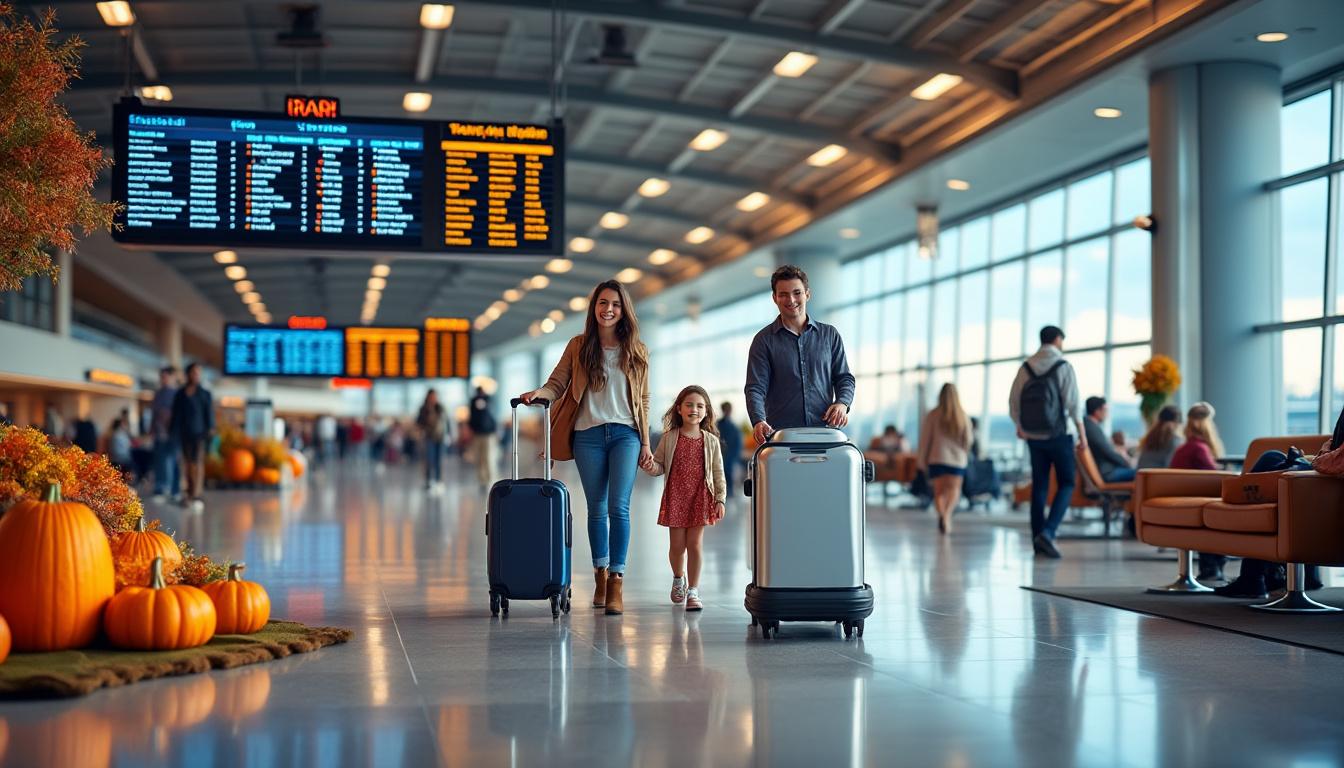
Thanksgiving Travel 2025: Best Days to Fly and Smart Airport Tips
Holiday travel in late November often feels like a carefully choreographed sprint — booking windows, crowded terminals, and unexpected delays all demand a clear plan. Recent data from trusted travel organizations projects a remarkably busy season, with an estimated 81.8 million Americans traveling over the Thanksgiving period. Air travel is a smaller slice of that total, but still significant: just over 6 million flyers are expected to take to the skies. Understanding when airports will be busiest and which airport tips make the biggest difference transforms a stressful experience into a manageable one.
Air traffic patterns for Thanksgiving 2025 point to a predictable rhythm. The heaviest days for flyers are the Tuesday and Wednesday immediately before Thanksgiving, while the holiday itself tends to be the lightest day for air travel. Travelers aiming to avoid long security lines and gate-area crowds should consider flights on Thursday or very early Friday. Preparation is the other side of timing: airlines and airports recommend arriving at least two hours before domestic departures and three hours before international flights.
Essential Airport Tips for Flyers
Applying a few dependable travel tips can reduce waiting time and minimize stress. Checking in online, downloading the airline app, and using mobile boarding passes are small steps that usually shave minutes — sometimes much more — off the airport experience. Those traveling with checked bags should monitor airline notifications closely for gate changes and delays.
- Check in online and save the boarding pass to the phone wallet.
- Use TSA PreCheck or similar programs where available to speed security lines.
- Pack carry-on essentials like medications, chargers, and a change of clothes in an easy-access place.
- Monitor airport alerts through the airline app and sign up for text notifications.
- Consider alternative airports if local hubs are forecast to be congested; smaller regional airports can offer smoother experiences.
| Day | Air Travel Congestion | Recommended Arrival Time | Best Strategy |
|---|---|---|---|
| Tuesday before Thanksgiving | High | 2.5–3 hours | Early flights; use airport lounges |
| Wednesday before Thanksgiving | Very high | 3 hours | Arrive early; check alternate airports |
| Thanksgiving Day | Low | 2 hours | Midday connections easier |
| Sunday after Thanksgiving | High | 2.5 hours | Afternoon departures less crowded |
Real-world case: the Parker family shifted a cross-country itinerary one day earlier after seeing a surge in Wednesday bookings; that move saved hours waiting and kept connections intact. That sort of flexibility is part of the travel planning that turns a stressful trip into an enjoyable one.
Further reading on timing, peak travel days and practical airport advice can be found in detailed guides that cover both flight and ground strategies, such as seasonal travel tips and trends and specific Thanksgiving travel tips. These resources help match the right arrival times and check-in steps to personal itineraries.
Key insight: choosing the right travel day and using airline apps are the simplest ways to reduce airport stress and reclaim travel time.
Road Trip Advice and Vehicle Safety for Thanksgiving Travel
With the majority of Americans on the move during the Thanksgiving holiday, road travel remains the dominant mode. AAA estimates show that most holiday trips are by car, and in the Rocky Mountain region alone about 6.3 million residents will travel at least 50 miles from home for the holiday period. That scale means that careful vehicle preparation and solid road trip advice are crucial for both convenience and safety.
Gas prices this season are generally steady compared with last year; for example, regular unleaded in Santa Fe hovered near $2.70 per gallon. Those numbers help with budgeting, and combined with a national decrease in domestic car rental costs — down roughly 15% — travelers have more options to optimize routes and timing.
Pre-Trip Vehicle Checklist
A short inspection before departure prevents many roadside headaches. Roadside assistance calls from previous holidays most often involve flat tires, dead batteries, and engine troubles. The checklist below captures high-impact tasks that can prevent those common failures.
- Tire check: Inspect tread depth and correct air pressure; carry a tire repair kit and portable inflator.
- Battery health: Test the battery if the car is older than three years; keep jumper cables accessible.
- Fluids and filters: Top off oil, coolant, windshield washer fluid; change air filter if due.
- Emergency kit: Warm blankets, water, nonperishable snacks, flashlight, and basic first-aid supplies.
- Roadside service plan: Confirm AAA or other coverage and store contact details.
| Item | Why It Matters | Action |
|---|---|---|
| Tire pressure and tread | Prevents blowouts and improves fuel economy | Inflate to manufacturer specs; replace if worn |
| Battery | Reduces risk of no-start incidents in cold | Test and replace if output low |
| Fluids | Protects engine and safety systems | Top off before departure |
| Rental car reservation | Lower rates; more vehicle choices | Book early to lock reduced rates |
Safety beyond maintenance matters just as much. Driving under the influence is a leading cause of holiday fatalities. Historical analysis from 2019 to 2023 shows 35% of holiday traffic fatalities occurred over the Thanksgiving period. Choosing a sober designated driver or a ride share at the end of festivities can be lifesaving decisions. For families on long drives, rotating drivers and planning regular rest stops reduce fatigue-related risk.
- Plan stops every two hours to stretch and refresh.
- Check forecast along the route and have alternate corridors.
- Use apps for live traffic and road closures to avoid holiday traffic hot spots.
Practical examples: a small travel startup centered on family road trips now recommends pairing rental car discounts with prepaid roadside assistance for trips longer than 300 miles. That combination reduces both cost and stress, and mirrors broader trends in the fall travel discounts space. For route ideas and timing strategies during busy weekends, consult resources like busy weekend travel tips and fall travel discounts and tips.
Key insight: attentive vehicle maintenance and sober driving choices are the most reliable ways to keep a road trip safe and on schedule.
Packing Essentials and Airport Tips: What to Bring and How to Pack
Packing for holiday travel mixes practicality with emotion; the right items protect against delays, weather changes, and the simple misery of being without a charger. A compact packing plan favors essentials while leaving room for souvenirs and those last-minute needs that make the holiday memorable. Integrating packing essentials into travel planning ensures both comfort and compliance with airport regulations.
Airline and TSA rules remain consistent: food items are often allowed but must comply with liquid limits in carry-ons, and cooler bags with solid foods are generally fine. For international flights, follow specific customs rules for certain foods. Packing with an emphasis on accessibility saves time at security checkpoints and helps keep connections intact.
Carry-On and Checked Bag Strategies
A carry-on should be a personal command center. It is the place for critical documents, medication, electronics, and one change of clothes. Checked luggage can carry bulkier items, but smart labeling and a tamper-evident strap minimize the risk of lost baggage becoming a holiday disaster.
- Carry-on essentials: passport/ID, medications, chargers, power bank, headphones.
- Comfort items: travel pillow, lightweight blanket, reusable water bottle (empty through security).
- Entertainment: pre-downloaded shows and reading material to avoid reliance on inflight Wi‑Fi.
- Food: durable snacks and a small cooler for perishables when allowed.
- Document backup: digital copies of itineraries and confirmations stored offline.
| Category | Examples | Why It Helps |
|---|---|---|
| Documents | ID, boarding pass, travel insurance | Smooth check-in and accident protection |
| Electronics | Phone, charger, power bank, earbuds | Staying connected and entertained |
| Comfort | Pillow, eye mask, warm socks | Better rest in airports and on planes |
| Safety | Medications, mask, hand sanitizer | Health readiness and peace of mind |
An illustrative scenario follows the fictional traveler Ava, who uses a two-bag system: a well-packed carry-on with essentials and a checked bag with gifts and bulkier clothing. When her flight was delayed, the carry-on’s meds and power bank kept the trip calm and connected. That approach is repeatable for nearly any traveler.
- Label luggage with both inside and outside tags to speed recovery if lost.
- Compress wisely — use packing cubes and leave a little room for return items.
- Know TSA food rules and pack liquids in compliance with requirements.
For expanded packing checklists and specialty tips on holiday travel and airport procedures, see curated resources like holiday travel tips and targeted Thanksgiving travel tips.
Key insight: a two-bag strategy and a prioritized carry-on keep travelers prepared for delays and ensure comfort during holiday travel.
Top Thanksgiving Destinations and Travel Planning Strategies
Where people choose to travel shapes timing and tactics. Domestic top spots this Thanksgiving include Orlando, Fort Lauderdale, and Miami, largely because of cruise departures and warm-weather getaways. Internationally, favorites include Paris, Amsterdam, and Vienna. These trends reflect a strong appetite for cultural and cruise travel in 2025.
Planning around popular destinations demands special attention to seasonal crowding, local transport, and lodging availability. Cruise-heavy ports often create spikes in airport and road demand on departure days. Booking early, selecting off-peak times, and using smaller nearby airports can significantly smooth the journey.
Strategies for High-Demand Destinations
Choosing a less crowded airport or adjusting travel dates by a day or two provides disproportionate benefits. For example, travelers bound for the southeastern cruise hubs can save time by flying a day earlier and overnighting near the port, avoiding the rush of same-day departures. Coastal airports also tend to provide more frequent shuttle and public transport options if planned in advance.
- Book accommodations early to secure reasonable rates and cancellation flexibility.
- Consider nearby regional airports like Wilmington for some East Coast itineraries; see local guidance at Wilmington airport Thanksgiving details.
- Check cruise embarkation rules and recommended arrival windows to avoid last-minute rushes.
- Use travel guides and local transit maps to plan first-day logistics and reduce time lost on arrival.
| Destination | Main Reason Travelers Go | Planning Tip |
|---|---|---|
| Orlando | Theme parks and cruise departures | Book park reservations and port transfers in advance |
| Fort Lauderdale | Cruise embarkation and beaches | Fly earlier; watch baggage cutoffs for cruise lines |
| Paris | Cultural tourism | Plan museum passes and reserve dining for peak evenings |
| Amsterdam | Historic sites and festivals | Purchase transport cards to skip lines |
A travel company example demonstrates the value of flexibility: a small concierge service recommends clients lock refundable fares and use a hotel night to absorb potential flight delays before cruise departures — a simple buffer that avoids missed sailings. That kind of travel planning often pays off by preventing costly rescheduling.
Key insight: destination-driven planning — booking early, using regional airports, and creating buffers — reduces stress and prevents missed connections.
Navigating Delays, Weather, and Holiday Traffic: Contingency Plans for Thanksgiving Travel
Delays and weather are part of holiday travel reality. In 2025, the travel landscape includes a recovering air system after recent disruptions. While air traffic controller shortages and brief government interruptions previously caused concern, airline operations have largely normalized. Still, travelers must account for possible interruptions and the well-known spikes in holiday traffic.
Traffic patterns for Thanksgiving show the busiest road periods are the Tuesday and Wednesday afternoons and evenings before the holiday, while Thanksgiving Day itself is lighter. The Sunday after the holiday typically mirrors the pre-holiday congestion as many return home. Planning around these peaks can save time and reduce stress.
Contingency Actions and Tools
Designing a contingency plan means pairing a flexible itinerary with tools that provide real-time information. Flight alerts, weather trackers, and alternate-route apps are indispensable. Credit card protections and travel insurance also serve as financial safeguards for cancellations and missed connections.
- Flexible tickets: Choose fares that allow changes or refunds without heavy penalties.
- Travel insurance: Cover medical or interruption events, especially for international trips.
- Real-time apps: Use flight tracker and traffic apps to react quickly to delays.
- Alternate plans: Identify hotels, rental car options, and backup flights within a short radius of your primary plans.
| Scenario | Immediate Action | Backup Resource |
|---|---|---|
| Flight cancelled | Rebook via airline app; hold for agent if needed | Purchase refundable ticket or use travel insurance |
| Major weather delay | Reserve a nearby hotel; confirm ground transport | Use credit card trip delay protections |
| Road closure on route | Reroute using navigation app; notify hosts | Locate alternate highways and rest stops |
One modeled scenario: a small tech firm runs a travel help desk for employees during Thanksgiving. When widespread delays hit a regional hub, the desk quickly rerouted travelers using alternate airports and flexible rental options, saving critical meeting attendance and holiday commitments. That operational model emphasizes swift communication and multiple pre-booked options.
For readers looking for deeper procedural checklists and trend analysis about holiday traffic and travel operations, reliable pieces on broader travel logistics are useful, including consolidated trend pieces like travel tips and trends and focused posts on holiday travel dynamics such as holiday travel tips. These help build robust contingency plans that account for both routine and exceptional disruptions.
Key insight: proactive contingency planning — flexible tickets, insurance, and real-time monitoring — transforms travel disruptions into manageable nuisances rather than trip-ending crises.