

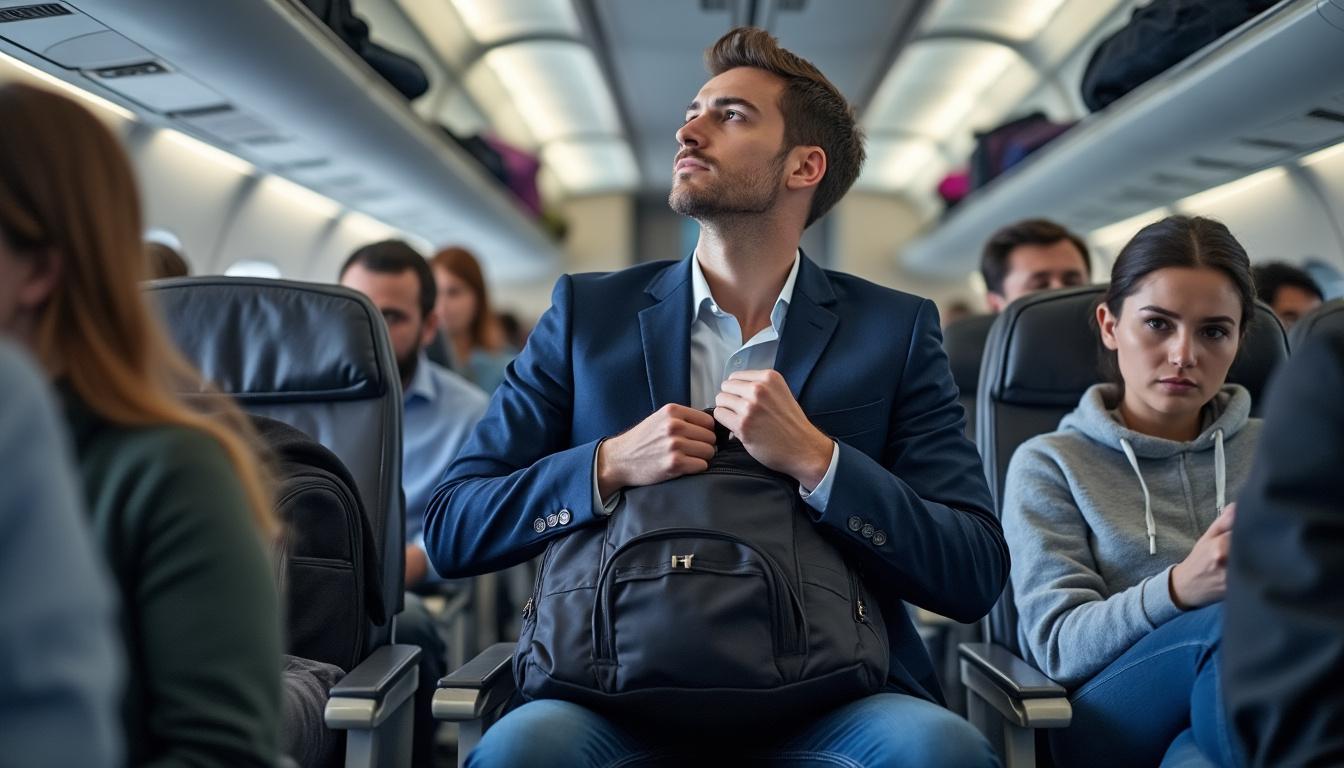
Why In-Flight Theft Remains A Silent Risk For Passengers
Air travel is often portrayed as secure and regulated, yet in-flight theft persists as a real, underreported threat. The enclosed environment of a cabin, combined with frequent seat changes, distracted passengers, and fast turnarounds, creates opportunities for opportunistic thieves and coordinated schemes alike. Examining why airline theft occurs clarifies how to better defend against it.
One major factor is complacency. Many travelers assume that the visible presence of flight attendants and airport security deters theft, but petty thieves exploit gaps in attention rather than blatant criminality. A laptop briefly left in the seat pocket during a restroom visit or a smartphone charging at the seat becomes an inviting target for a person who blends in with the flow of passengers.
Patterns And Profiles Of Airborne Thieves
Experienced observers note two common profiles: the opportunist and the organized actor. Opportunists steal when convenience allows—an unattended bag in the galley, an unlocked overhead bin, or a carry-on temporarily moved during boarding. Organized actors, by contrast, may work in teams, create distractions, or use forged credentials to access baggage areas.
Consider a fictional passenger, “Maya,” on a busy redeye connecting through a major hub. While Maya slept, a seatmate who had spent the flight nearby subtly monitored valuables, waiting for the moment Maya stepped away. That brief lapse cost Maya a handbag containing a passport and credit cards. This anecdote reflects patterns suggested by incident reports: thefts often happen during low-attention moments on board or during quick deplaning.
Systemic Weaknesses That Encourage Theft
Certain structural elements of air travel increase vulnerability. Overhead bins are shared spaces where personal items can be placed and later misidentified or pilfered. Seat pockets and under-seat storage are hidden from crew supervision. On longer schedules with night flights, passenger fatigue lowers vigilance, and cabin lights dim, creating cover for theft.
Legislation and airline policies sometimes lag behind evolving methods of theft. Reporting procedures can be opaque, discouraging passengers from filing formal complaints. When passengers do not report incidents, airlines and regulators miss data needed to improve airplane security and prevention programs.
Why Reporting And Awareness Matter
Transparent reporting encourages better theft prevention systems. Passengers who know how to document a loss—what to record, whom to contact, and how to follow up—help create a clearer picture of the scale and methods of theft. Airlines can then adjust staffing patterns, surveillance, and boarding procedures to reduce risk.
Public awareness campaigns that highlight simple precautions can reduce the pool of easy targets. For instance, if more travelers understand how frequently carry-on items are lost or stolen, they will be less likely to leave electronics unattended while charging in-flight or to stow valuables in shared bins without extra protection.
Ultimately, the cabin environment is a community. Elevating collective vigilance and creating clear reporting channels transform that community into an active defense against theft. The key insight: recognizing that theft is a likely possibility changes behavior and reduces risk.
Practical Travel Tips To Protect Belongings During Flight
Simple, repeatable behaviors produce outsized returns when it comes to travel safety. Small adjustments in how items are packed, carried, and accessed can dramatically reduce the chance of losing valuables. These techniques are practical and designed to fit within typical passenger routines.
Begin with the principle of layered protection: combine physical deterrents, placement strategies, and behavioral habits. That three-part approach makes theft more difficult and less rewarding for would-be thieves. Each layer serves as a fail-safe if another is bypassed.
Layer 1: Physical Measures
Use discreet anti-theft gear for valuable items. A slim money belt under clothing, a cut-resistant shoulder strap, or a small cable lock for zippers are inexpensive additions that do not interfere with security screening. These items create friction and visibility, signaling to potential thieves that stealing would require effort and risk.
Another physical strategy is to place valuables in compartments closer to the body. Electronics and important documents stored in an internal backpack pocket or a locking compartment of a carry-on are harder to access quickly than items in a loose tote. Keep necessary items—passport, boarding pass, phone—within immediate reach but secured by zippers or clips during moving periods like boarding and deplaning.
Layer 2: Smart Placement And Seat Choice
Seat selection matters for theft prevention. Choosing a window seat reduces access to items under the seat and provides a fixed wall on one side, making it harder for an adjacent person to reach into a bag. Bulkhead seats offer more space to position a bag in front and keep an eye on it, while aisle seats increase exposure to foot traffic and passing passengers.
When stowing in the overhead bin, place the bag with its front facing outward and items that are less valuable near the opening. If travel companions are present, arrange carry-ons so they are accessible to the group but not to strangers. This strategy reduces the likelihood that an unobserved hand can slide in a pocket or compartment.
Layer 3: Behavioral Habits
Adopt a routine of quick, deliberate checks. Before moving away from a seat, glance for personal items in pockets, on the tray table, and under the seat. During long flights, keep valuables in a locked pouch or attached to the person when sleeping. If leaving the cabin for any reason, even briefly, bring the most critical items along or secure them with a simple lock.
When interacting with seatmates, maintain polite alertness. Small talk can reveal whether another passenger is paying attention to personal boundaries. If behavior seems inappropriate—frequent reaching into shared areas or persistent close proximity—politely adjust seating positions or notify a crew member. This preserves personal comfort while maintaining safety.
The most effective preventive strategy combines these layers. A traveler who uses an anti-theft strap, selects a strategic seat, and conducts regular checks creates a resilient system that discourages theft and safeguards belongings. The clearest takeaway: consistent small habits lead to significant protection.
Advanced Airplane Security Strategies And Tech For Travelers
For those seeking a step beyond basic precautions, technology and strategic systems offer powerful defenses against theft prevention challenges. Emerging products and thoughtful packing systems can alert owners to tampering, track lost items, and create barriers that deter theft.
Begin with tracking devices. Small Bluetooth or GPS trackers placed inside valuable bags or devices can provide location data if an item goes missing. These tools are not foolproof—range limits and airline policies matter—but they give a recovery advantage that did not exist a decade ago.
Comparing Common Security Devices
Several categories of security tech are useful: mechanical locks, electronic trackers, and physical deterrents like slash-resistant straps. Mechanical locks are legal for carry-on use and create visible protection. Electronic trackers offer remote location capabilities, though they rely on battery life and signal networks.
| Device Type | Primary Benefit | Limitations |
|---|---|---|
| Combination or Cable Locks | Makes unauthorized access slower and more noticeable | Can be cut by determined thieves; bulkier to carry |
| Bluetooth Trackers | Enables location updates via smartphone apps | Range limitations; battery dependency |
| Slash-Resistant Straps | Prevents bag slashing and quick grabs | Increases carry weight; not stealthy |
Choosing the right mix depends on travel type. Short domestic flights may benefit most from simple locks and vigilance, while multi-leg international journeys could justify GPS-enabled trackers and more robust straps. Evaluate what is essential—passports and devices merit the most protection.
Practical Tech Use Cases And Airline Rules
Technology must be used in harmony with airline and security rules. Devices with lithium batteries must comply with transport restrictions, and some trackers should be switched to airplane mode during flight. Research airline policies before travel to avoid confiscation at screening.
In an example case, a frequent traveler named “Samir” used a discreet Bluetooth tag in a toiletry kit. After a multi-stop itinerary, the tag revealed that the kit had been moved to a different plane during a connection, allowing Samir to request the item at the next gate rather than assume loss. This kind of technology turned a potential permanent loss into a recoverable misplacement.
Integrating Tech With Routine Practices
Combine tracking tech with simple habits: photograph important documents before departure, record serial numbers of electronics, and set reminders to check seats and storage during layovers. These practices augment modern gadgets and yield faster recovery or evidence for claims when theft occurs.
Ultimately, advanced tools amplify good routines. When devices are used intentionally, they reduce stress and speed response if an item goes missing. The main insight: technology is most effective when paired with disciplined travel habits and an understanding of airline regulations.
Behavioral Tactics, Reporting Airline Theft, And Ensuring Passenger Safety
Behavioral strategies and clear reporting protocols transform a passenger from a passive target into an active guardian of possessions. These methods include social tactics, documentation practices, and knowing how to engage airline staff to address suspected airline theft.
Social tactics are subtle but effective. Sitting with friends or trusted companions, when possible, increases mutual monitoring. When alone, creating psychological signals—such as placing a visible travel document on the seat or keeping a water bottle near personal items—signals ownership and increases the perceived risk for a thief.
How To Report Theft On Board And After Disembarkation
Documentation is the foundation of any follow-up. Immediately after discovering a loss, note the flight number, seat number, and a succinct description of missing items. Photograph the area where the loss occurred if feasible; visual records help airline staff and law enforcement understand the context.
Contact the cabin crew first for immediate intervention. Crew members can review cabin logs, check with gate agents, or contact ground security. If the loss is discovered after disembarkation, report it to the airline’s lost-and-found department and file a formal complaint with recorded timestamps.
Filing A Claim And Working With Authorities
For valuable items, notify the airline’s claims department and, if necessary, local law enforcement at the destination. Keep receipts and serial numbers for electronics and maintain copies of all correspondence. Persistence often pays; travelers who follow up consistently increase the chance of recovery or compensation.
One illustrative scenario involves a traveler named “Lena” who lost a tablet during a connection. By immediately reporting to the airline, providing serial numbers, and following up with destination airport security, Lena recovered the device within 48 hours. Her methodical reporting created a searchable trail that facilitated retrieval.
Maintaining Passenger Safety Without Hostility
Passenger safety is not only about possessions but also about personal wellbeing. When confronting suspicious behavior, avoid escalation. Use light firmness—requesting a seat adjustment or politely asking a person to keep belongings close—rather than accusation. If a situation feels threatening, alert a flight attendant or gate agent rather than confronting alone.
Training crew and staff on theft patterns helps the entire system. Passengers who understand reporting options and airline procedures contribute to a safer environment. The final practical tip: document, report, and follow up steadily; that clarity often distinguishes recovery from loss.
Packing Systems And Routine Checks For Ongoing Travel Safety And Secure Luggage
Long-term travel demands systems that reduce friction and preserve vigilance. Developing repeatable packing routines and performing short, regular checks protect both belongings and mental energy. These systems apply to frequent flyers, business travelers, and families on multi-leg journeys seeking to protect belongings systematically.
A robust packing system begins with categorization. Allocate three compartments: immediate essentials, inflight-access items, and checked-only goods. Immediate essentials—passport, credit cards, medications—should be kept in a secure, easily reachable place. Inflight-access items—earbuds, a small notebook, or a light sweater—should be accessible but not loose. Checked-only goods should be properly recorded and documented.
Sample Routine Checklist For Every Flight
- Before boarding: confirm passport and tickets in a secure pouch, photograph documents for backups.
- During boarding: place valuables in a locking compartment or on the person; stow carry-ons with zippers facing inward.
- Before deplaning: conduct a 30-second sweep—check pockets, seat pockets, under the seat, and the overhead bin above the seat.
- After deplaning: verify all items immediately at the gate and again upon leaving the airport terminal.
Each item on the checklist is intentionally brief to be memorable. The goal is to create habits that become automatic, thus avoiding reliance on memory or circumstances.
Maintaining Secure Luggage Over Time
Regular maintenance of luggage reduces vulnerabilities. Inspect zipper integrity, replace worn straps, and ensure any locks function correctly. Worn luggage is easier to breach and signals neglect, which can attract opportunistic thieves. Routine care demonstrates ownership and care, both deterrents in public spaces.
In a multi-leg example, a traveler named “Carlos” consolidated small electronics into a single padded organizer. That organizer remained on his person during each connection, eliminating repeated access to the overhead bin. The consolidation simplified checks and made it obvious if anything was amiss.
Where To Find Trusted Travel Advice And Inspiration
Curated resources on packing and security techniques expand a traveler’s toolkit. For culturally informed and celebrity-tested methods, guides can offer compact, practical hacks that fit real passenger lifestyles. A useful resource for inspiration is available through a collection of packing and security ideas found at celebrity packing hacks and travel tips.
For broader travel advice and behavior-focused strategies, consult travel editorial sites that combine expert input with traveler experiences. Another helpful resource covering practical hacks and preparation strategies is a comprehensive travel tips guide available online at travel hacks guide for secure travel. These aids reinforce routines and introduce proven methods that mesh with modern passenger safety needs.
Keeping belongings secure is an ongoing practice rather than a single action. By combining intentional packing systems, routine checks, and informed resources, travelers build resilience that significantly reduces the likelihood of theft. The decisive insight: consistent systems trump occasional vigilance every time.