

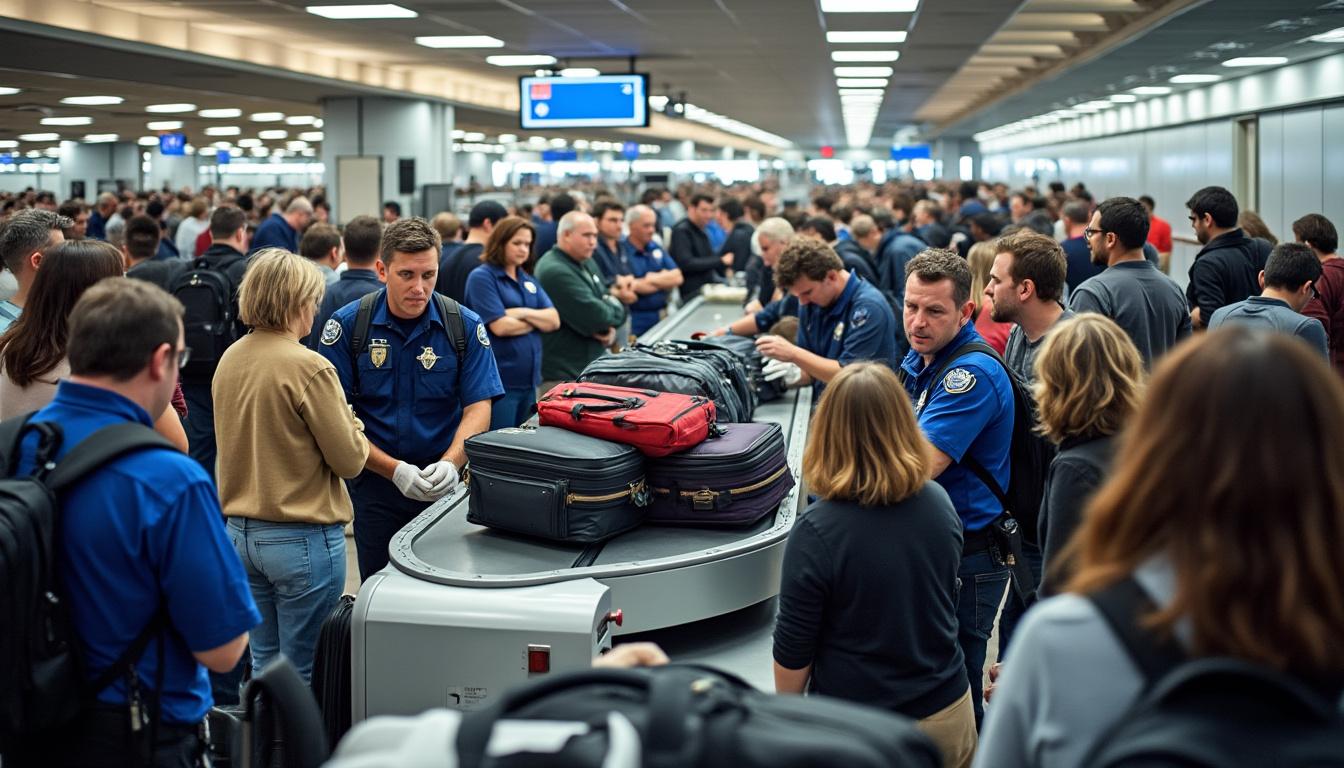
How a Government Shutdown Is Triggering TSA Delays and Airport Security Strains
When a government shutdown affects the Department of Homeland Security, the ripple effects reach airport terminals within hours. The department that oversees the Transportation Security Administration is central to daily travel operations, and when federal funding lapses, the workforce dynamic shifts dramatically. Essential personnel are typically required to continue working, yet the lack of pay creates a fragile equilibrium that can transform into visible TSA delays and airport delays.
Consider a fictional travel manager, Elena Morales, who runs SkyBridge Travel. Elena coordinates group itineraries for university study-abroad programs. During the 43-day funding lapse the previous year, a few of her groups encountered chaotic mornings at regional airports as officers called out or were late due to child care and financial strain. These real-world echoes inform how travel planners and passengers should interpret recent headlines about DHS funding expiring and the potential for renewed operational stress.
There are important distinctions to bear in mind. In the most recent lapse, only DHS funding expired while the rest of the federal budget remained active through fiscal deadlines. That meant air traffic controllers at the Federal Aviation Administration continued to receive paychecks, reducing the immediate risk of widespread cancellations. Nonetheless, the TSA workforce—about 95% deemed essential in contingency plans—was required to continue screening passengers and baggage, often without immediate pay.
Historical patterns show disruption tends to accumulate rather than appearing overnight. Last year, after weeks of increasing strain, TSA temporarily closed checkpoints at major airports and airlines were ordered to scale back schedules to prevent cascading delays. That sequence illustrated the difference between localized bottlenecks and system-wide collapse: a handful of unscheduled absences at a small airport can produce disproportionate extended wait times, whereas large hubs may absorb short-term gaps with overtime or redeployments.
For travelers and airport staff alike, morale and memory matter. Elena’s teams reported that officers who worked through the previous shutdown carried both fatigue and a heightened sensitivity to schedules. The threat of repeated unpaid work contributes to higher unscheduled absences, which in turn elevates the chance of visible queueing and slower security screening processes.
Trade groups representing airlines, hotels, and travel services have voiced concerns about how prolonged lapses could translate into tangible travel disruptions during busy seasons. When essential screening staff are required to work without pay, the probability of callouts rises and the seams of airport operations fray. Aviation experts caution that even if flights take off, the passenger experience at checkpoints can deteriorate quickly.
To translate these dynamics into practical terms: expect unpredictable variations in wait times, potential temporary checkpoint closures at smaller airports, and administrative decisions by airlines to delay departures in order to wait for passengers cleared through security. That chain of events is the reason why understanding the causes behind a shutdown is the first step in effective travel planning.
Key insight: a DHS-focused shutdown does not automatically ground flights, but it magnifies the risk of airport security slowdowns that cascade into broader passenger disruption.
What Travelers Should Expect at Airport Security During a Shutdown
Passengers facing a period of TSA delays need clear expectations to avoid unnecessary stress. Airports are complex ecosystems where a small human-resource shock can ripple outward. If a few screeners do not report for duty, the effect is magnified at facilities with a single checkpoint or limited staffing flexibility. Travelers should therefore plan for variability: some days may run close to normal, while others may see pronounced extended wait times.
Operationally, the screening process may exhibit a range of impacts. Primary screening lines for carry-ons and passengers will be most visible. Secondary screening for alarms or random checks can be slower due to a reduced pool of supervisors and specialized staff. Behind the scenes, checked baggage screening and administrative processing may suffer delays that are less visible but equally consequential, occasionally affecting the speed of baggage loading and flight dispatch.
Small regional airports often lack spare personnel to absorb absences. In those environments, a single callout can create an immediate queue that grows rapidly. Conversely, major hubs have contingency plans and can reassign staff temporarily, but the scale of travel during peak periods can still overwhelm those measures.
Airlines may alter flight operations strategically to reduce the risk of misconnects. A carrier might delay a departure to accommodate passengers still in screening, or they might temporarily tighten boarding windows to maintain schedule integrity. Such tactical decisions can produce localized ripple effects on subsequent departures.
What does this mean for passengers? The short answer is that flexibility and proactive planning help avoid worst-case scenarios. Travelers who build buffer time into itineraries—arriving at the airport significantly earlier than usual—are more likely to reach gates without stress. It is also wise to monitor live wait-time tools available on many airport websites; these provide real-time signals about whether lines are spiking and can inform last-minute adjustments.
Simple behavioral adjustments also improve throughput. Packing with screening in mind—removing prohibited items, consolidating liquids, and ensuring boarding documents are accessible—speeds individual transactions and reduces the need for additional checks. Equally important is treating screening staff with empathy. Officers performing duties without pay are managing stress and public frustration simultaneously, and calmer interactions reduce the risk of secondary delays.
Key insight: anticipating variability at checkpoints and adjusting arrival times accordingly will reduce the direct passenger impact of a shutdown-driven security slowdown.
Practical Travel Preparation To Minimize Airport Delays
Preparation becomes the traveler’s strongest tool during periods of potential travel disruptions. A pragmatic checklist and clear scheduling can preserve connecting itineraries and reduce anxiety. SkyBridge Travel developed a standard playbook for group journeys that scales well for solo travelers and families.
Start with arrival timing. Rather than the usual 90-minute rule for domestic departures, add an extra buffer depending on airport size and travel season. Below is a concise table with recommended arrival windows based on common airport profiles. These recommendations help passengers avoid scrambling at checkpoints during peak bottlenecks.
| Airport Type | Recommended Arrival Before Departure | Rationale |
|---|---|---|
| Major international hub | 3 hours | Large volumes and potential secondary screening; international immigration adds time |
| Large domestic airport | 2.5 hours | High throughput but more staffing flexibility |
| Regional airport | 2.5–3 hours | Limited checkpoints; single-callout leads to longer queues |
| Small municipal airport | 2 hours | Shorter lines usually, but vulnerability to single-staff absence |
Next, prepare carry-on and checked luggage to speed security screening. A short list of practical measures helps:
- Consolidate liquids into a single clear quart-size bag and ensure containers are travel-size.
- Pack electronics to be readily accessible for screening trays.
- Avoid bringing prohibited items and double-check knives, large aerosols, and lithium batteries.
- Use TSA PreCheck or similar trusted-traveler programs when available to bypass some screening lanes.
- Keep identification and boarding passes available to minimize fumbling at checkpoints.
Additional operational tips include checking airport security wait times before departing for the terminal. Airline and airport apps increasingly display live queue estimates; use those signals to leave earlier or adjust plans. For travelers with connecting flights, allow for longer minimum connection times than usual—especially when the inbound leg arrives at a different terminal requiring re-screening.
For groups or families, assign a single person to manage documents and a second to handle carry-on organization. That division of labor reduces individual stress and accelerates the throughput of multiple passengers. Travelers may also consult resources like air travel strategies for shutdowns which provide adaptive tactics for specific disruptions.
Finally, prepare for the human side: patience and planning reduce friction. Pack snacks, entertainment for children, and any essential medications in carry-ons. These measures prevent additional delays due to last-minute searches or requests for assistance.
Key insight: deliberate travel preparation—from arrival timing to luggage organization—can blunt the operational consequences of a shutdown and protect travel plans.
Operational Dynamics: TSA Staffing, Federal Funding, and Airline Responses
Understanding how agencies and carriers respond operationally clarifies why a DHS funding lapse matters for travelers. While the FAA’s payroll continuity for air traffic controllers reduces the immediate risk of mass cancellations, the TSA’s status is different: many officers are deemed essential and must work without pay. This distinction changes the operational calculus for airports and airlines.
TSA contingency plans classify around 95% of staff as essential, yet essential status does not eliminate the financial pressures on workers. Reduced morale and increased unscheduled absences are probable, as staff balance duties with family responsibilities and financial needs. Unscheduled absences are particularly disruptive where staffing is lean and cross-training is limited.
Airlines monitor staffing signals closely. If checkpoint congestion begins to rise, carriers may proactively adjust boarding windows, reroute staff to expedite boarding, or hold flights briefly to accommodate screened passengers. In extreme cases, airlines have reduced schedule density in coordination with the Department of Transportation to manage airport throughput without creating unsafe delays downstream.
Operational case studies from prior shutdowns illustrate a spectrum of outcomes. At Philadelphia International during last year’s prolonged lapse, temporary checkpoint closures were required after staffing shortages intensified. On other occasions, major airlines increased ground staff to speed boarding and baggage handling, offsetting some screening delays. These reactive measures highlight that local leadership at airports and carriers plays a crucial role in how quickly services normalize.
Risk mitigation strategies used by professionals include redeployment of supervisory personnel to critical checkpoints, flexible scheduling to cover predicted peaks, and cross-agency coordination with airport authorities. When such steps are insufficient, airports may temporarily consolidate operations—closing lower-traffic checkpoints to concentrate available staff, albeit at the cost of longer lines in the remaining lanes.
Travelers should also be aware of the broader economic messaging from industry groups. In joint statements, trade associations representing travel and hospitality have warned that continuing to require essential personnel to work without pay elevates the chance of operational instability and undermines the broader travel economy. This public pressure sometimes accelerates political negotiations over federal funding, yet outcomes remain uncertain until lawmakers reach an agreement.
Key insight: the interplay between TSA staffing realities and airline operational choices determines how visible airport security impacts will be, with local leadership and contingency planning shaping traveler experiences.
Passenger Impact, Case Studies, and Expectations for How Long a Shutdown Might Last
Assessing the likely duration and passenger consequences of a shutdown requires reading political signals alongside operational indicators. Lawmakers often negotiate accessible fixes, but political impasses can extend a lapse for weeks. When negotiation stalls extend beyond days, the incremental strain on essential workers increases the probability of higher passenger impact in the form of missed flights and longer queues.
Consider the fictional Garcia family traveling from a mid-sized regional airport to visit relatives during a spring break window. With a 6 a.m. flight, the family arrived two-and-a-half hours early in response to news coverage. Their early arrival proved prudent: by 9 a.m., a checkpoint that typically processed passengers within 30 minutes had expanded to nearly two hours due to an unscheduled absence. Their boards were preserved thanks to the buffer, demonstrating the value of conservative planning.
Industry groups have emphasized that prolonged shutdowns are particularly perilous as travel seasons pick up. In springtime and holiday peaks, passenger volumes compound staffing stress. The combined statement from travel industry associations warned that essential staff working unpaid increase the risk of absences and operational instability. Airlines and hotels echoed that assessment, urging a swift funding resolution to protect broader economic activity.
How long will such a shutdown last? Political motives and external events often dictate pace. In recent negotiations, certain lawmakers conditioned DHS funding on policy changes related to immigration operations after high-profile incidents. Such conditions can extend debate and deepen uncertainty. From a traveler’s perspective, the prudent approach assumes that contingency pressures can persist beyond a few days and that planning for a week or more of elevated uncertainty is wise.
Practical travel advice includes buying flexible fares when possible, booking refundable or changeable tickets, and insuring critical travel. When travel cannot be postponed, consider alternatives: selecting flights at less congested times, flying through airports with multiple checkpoints, or using trusted traveler lanes. For those facing complex itineraries, professional travel managers like Elena and SkyBridge Travel recommend contingency plans for missed connections and pre-arranged lodging options.
Beyond logistics, there is a human narrative: TSA officers, airline staff, and ground crews are maintaining essential services under strain. Scenes of calm cooperation between travelers and officers frequently reflect small acts of empathy—keeping boarding passes ready, answering questions politely, and letting staff lead the process—which greatly reduce friction for everyone involved.
Resources for travelers include strategy guides and diversion tips that explain alternative routing and handling unexpected rebookings. For instance, the curated guidance at flight diversion tips offers practical scenarios for rerouting when initial plans are disrupted. These materials complement official updates from airports and carriers.
Key insight: a persistent shutdown raises the odds of tangible airport security friction, but conservative planning and empathy at checkpoints preserve travel resilience and protect itineraries from cascading delays.