

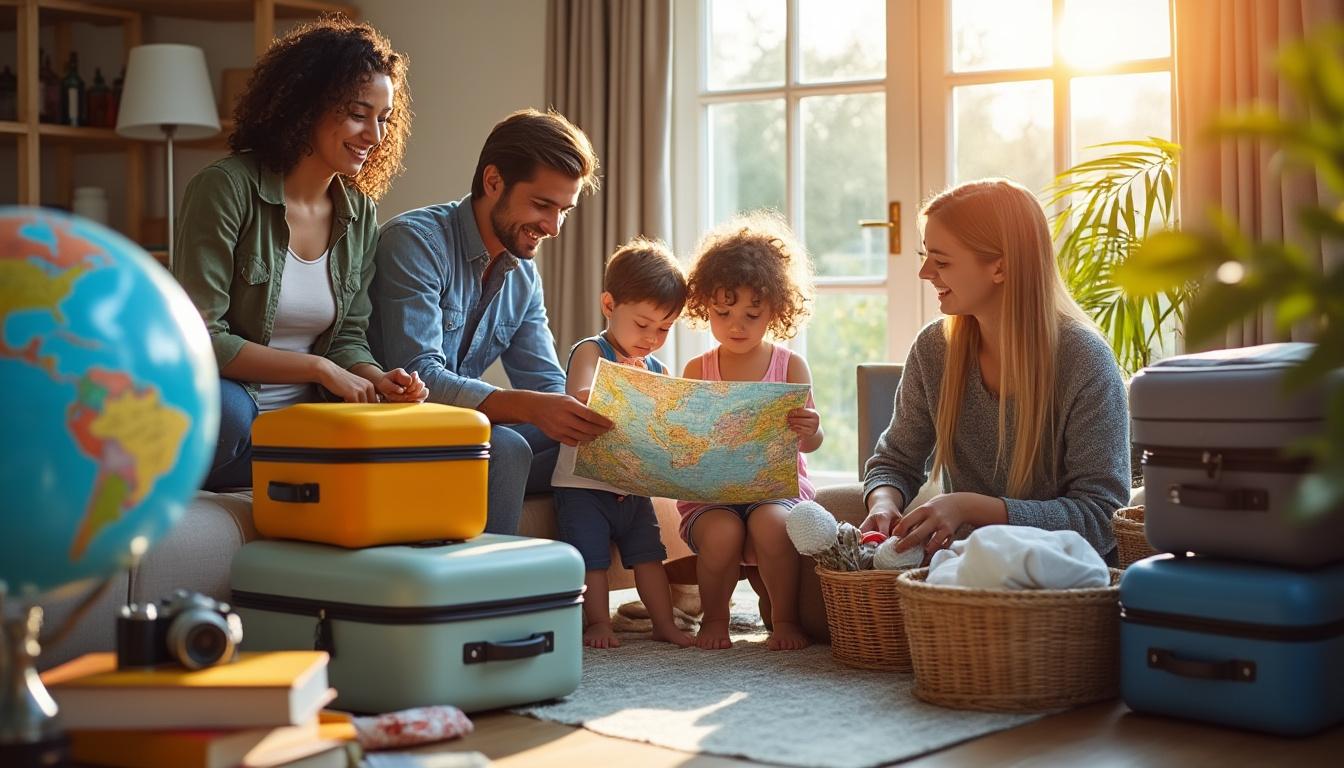
Planning Essentials for Family Travel: Building a Practical Travel Guide
Turning a desire for adventure into a real family trip begins with a clear, actionable plan. A strong planning phase repositions a vague idea into a scheduled, budgeted, and exciting family travel experience. The Rivera family — a fictional but representative household used as a throughline — began with a simple map, a calendar, and three guiding questions: where, when, and why. Those questions shape an effective travel guide that can be adapted by families of all sizes and ages.
Start by narrowing down destination options with practical filters: travel time from home, seasonal weather, local health requirements, and child-friendly activities. Consider destinations that offer diverse experiences within short distances. For example, a coastal city with nearby parks and museums often beats a single-attraction trip for families because it provides both variety and contingency plans.
Problem: Decision Overload
Too many options stall progress and lead to inaction. The Rivera family addressed this by ranking potential destinations on three axes: safety, costs, and child engagement. Each destination received a score and the top two moved to the next stage of research. This quick triage prevents endless browsing and aligns the family’s expectations early on.
Solution: A Practical Research Workflow
Use a short research checklist to validate a destination. Key items include visa and vaccination rules, peak tourist seasons, accommodation options with family rooms, and transportation logistics. For hands-on resources, consult a contemporary online guide that focuses on family itineraries; a well-curated resource like family getaways tips offers ideas for planning multi-age activities and time management while traveling.
Pair destination research with a lightweight itinerary that includes buffer days. Buffer time turns unexpected delays and mood swings into manageable parts of the trip rather than crises. The Rivera family scheduled one flexible day every four days, enabling spontaneous exploration or restful recovery, which proved essential when a sudden rainstorm altered outdoor plans.
Example: Choosing a Family-Friendly Destination
Consider Puerto Rico for an all-in-one family destination: beaches, rainforests, and historic towns. A resource focused on family adventures in Puerto Rico helps shape expectations and offers local insights that save time and reduce trial-and-error on arrival. A smart plan combines major sites with neighborhood discovery, short transit times, and practical meal options that appeal to kids.
When creating a travel guide for families, include a modular packing plan, emergency contacts, and a quick-reference schedule on the phone. These small organizational moves cut stress. The Rivera family printed two copies of their itinerary and kept one in a backpack, while storing the digital copy in a shared folder accessible by multiple adults.
Key tools for early planning include a shared calendar (for flights and lodging), a budgeting spreadsheet, and a checklist app. These instruments keep responsibilities clear and prevent last-minute scrambles. Incorporating local festivals or cultural events into the calendar can enrich the vacation, turning routine travel into an educational family story.
Final insight: A practical planning stage converts uncertainty into a structured plan and sets the tone for a successful family trip while preparing the family emotionally and logistically for the adventure ahead.
Packing Strategies and Travel Essentials for a Family Vacation
Packing efficiently is one of the most tangible ways to lower travel stress. Packing for a family requires thinking in layers: essential documents, clothing stratified by weather, health and hygiene kits, entertainment for transit, and versatile items that serve multiple purposes. The Rivera family implemented a zone-based packing strategy: one suitcase for clothing, one for toiletries and medical supplies, and a carry-on dedicated to essential documents and immediate needs.
Start with a master packing list that lives in the cloud and is editable by all adults sharing responsibility. This living checklist evolves over trips and becomes more accurate with each journey. Include items such as copies of passports, a small first-aid kit, chargers, compact snacks, and a travel blanket. Special items for children — a favorite toy or comfort object — can dramatically improve sleep and mood during travel.
Problem: Overpacking and Panic at Check-In
Overpacking increases fees, slows mobility, and creates decision fatigue. The Rivera family avoided this by adopting a “mix-and-match” clothing rule: three tops and two bottoms per person per week, with one set reserved for emergencies. Shoes were limited to two pairs each. Rolling clothes and using packing cubes compressed space and made retrieval quicker while maintaining organization.
Solution: Focus on Travel Essentials
Identify and prioritize travel essentials that must be accessible during transit. These include travel documents, a basic medical kit, a change of clothes for toddlers, snacks, and entertainment. By placing these in a grab bag or family carry-on, the biggest travel stresses are mitigated. For extended journeys, bring compact laundry soap and plan for mid-trip laundry to reduce luggage volume.
- Documents: passports, vaccination records, reservation confirmations.
- Health kit: fever reducer, adhesive bandages, antihistamine, rehydration packets.
- Entertainment: downloaded shows, coloring books, travel games.
- Comfort items: travel pillows, familiar stuffed toy or blanket.
- Adapters and chargers: universal adapter, power bank, charging cables for multiple devices.
Packing strategies for long-haul flights require special attention. Layering clothes and carrying a lightweight down jacket that doubles as a pillow and blanket can be liberating. Parents should plan in-flight snacks and small activities timed to coincide with the expected sleep window. A focused approach reduces the likelihood of tantrums and maximizes rest for everyone.
Example: Strategic Use of Travel Gear
Choose multi-functional items: a scarf that becomes a blanket, shoes that are both comfortable and dressy, and a stroller that folds compactly. When renting larger items like car seats at the destination, research reputable suppliers in advance. For inspiration on packing tactics tailored to longer trips, consult specialized guides such as the one on packing strategies for long-haul.
Final insight: Well-considered packing turns an arduous packing morning into a calm, methodical routine and ensures the trip starts with energy rather than stress.
Budgeting and Trip Planning: Turning a Dream into a Real Family Trip
Budgeting is the backbone of transforming aspirations into a confirmed family vacation. A realistic budget informs the destination choice, the duration, and the type of accommodation that keeps everyone comfortable. The Rivera family used a tiered budgeting strategy: fixed costs, variable costs, and contingency funds. This structure enables decision-making under clear financial constraints and preserves flexibility.
Fixed costs include flights, accommodations, visa fees, and pre-booked activities. Variable costs cover food, local transport, and incidental purchases. Contingency funds address emergencies or last-minute opportunities. A good rule of thumb is to set aside at least 10–15% of the total budget as a contingency, increasing this in uncertain times or when traveling to regions with fluctuating currency or variable service reliability.
Problem: Hidden Costs and Unplanned Expenses
Unexpected fees from baggage surcharges, local taxes, or last-minute bookings can derail budgets. The Rivera family combed through all booking confirmations to find hidden fees and reviewed cancellation and change policies. Travel insurance for families reduces financial exposure to cancellations and health emergencies, especially when a trip involves international flights.
Solution: A Transparent Budget Table
Creating a simple budget table clarifies expenses and keeps the group accountable. The table below organizes expected costs and helps identify areas where savings can be found. Use a spreadsheet with editable categories so the budget can be shared and updated in real time by all adults involved.
| Category | Estimated Cost | Notes |
|---|---|---|
| Flights | $1,800 | Round-trip, economy with one checked bag per adult |
| Accommodation | $1,200 | Family apartment for 7 nights |
| Local transport | $300 | Car rental + taxis |
| Food | $600 | Mix of groceries and dining out |
| Activities | $400 | Entrance fees, tours, and experiences |
| Contingency | $400 | Emergency and flexibility fund |
Budgeting tools include fare-tracking apps, accommodation alerts, and comparison engines. Additionally, timing bookings during shoulder seasons often yields lower rates without sacrificing weather or experiences. For destination-specific budgeting and tips on family-friendly regions, resources like a practical Caribbean travel guide help estimate local costs and highlight family-oriented options.
Example: Saving Strategically
Small savings add up. The Rivera family saved on meals by choosing accommodation with a small kitchen and by scheduling one picnic per day. Local markets provided fresh and inexpensive options, and selective splurges on guided activities balanced the day-to-day savings. Booking early for popular family attractions also often secures lower prices.
Final insight: A disciplined, transparent budget turns a wishful plan into a realistic family trip, and the ability to adjust spending on the fly preserves both enjoyment and financial safety.
Safety, Health, and Practical Travel Advice for a Family Trip
Safety and health are non-negotiable elements of successful family travel. A comprehensive approach combines preventive measures, situational awareness, and contingency planning. The Rivera family created a safety dossier that included local emergency numbers, hospital locations, allergy information for each family member, and translations of key phrases into the local language. This dossier was stored both digitally and as a printed copy.
Start by consulting official travel advisories and destination-specific safety guidance. For instance, when traveling to destinations with higher levels of tourist activity, it is useful to read localized safety recommendations and to learn basic local laws that could affect families. Safety also includes avoiding risky times for travel, such as late-night arrival in unfamiliar neighborhoods, and choosing family-oriented lodging in secure areas.
Problem: Health Events and Medical Emergencies
Unexpected illness can disrupt a trip. The Rivera family prioritized travel insurance that covers medical evacuation and pediatric care. They also packed a medical kit tailored to children, including fever reducers dosed for weight, oral rehydration salts, and antiseptic supplies. For destination-specific guidance, reading local safety advisories and up-to-date travel tips can alert families to seasonal risks, such as mosquito-borne illnesses or high pollen levels.
Solution: Layered Risk Management
Layer risk management into daily routines. Use lockable luggage and money belts for important documents. Teach children a simple safety drill: pointing to a pre-assigned adult and locating a recognizable landmark if separated. Carry a physical card with the accommodation address in the local language and phone numbers for quick reunification.
Beyond immediate safety, consider psychological wellbeing. Traveling with children can produce anxiety for parents and kids alike. Techniques for reducing travel anxiety include establishing predictable bedtime routines, scheduling quiet downtime, and using calming sensory items. For broader guidance on travel anxiety, refer to expert pieces that address family concerns and calming strategies.
Practical travel advice includes checking local healthcare infrastructure, ensuring routine vaccinations are current, and packing copies of prescriptions. Also plan for climate-related needs: sunscreen, hydration packs, warm layers, or waterproof gear depending on the destination. For safe travel to destinations with specific considerations, consult authoritative safety resources and community feedback.
Example: Responding to a Mid-Trip Illness
When a child fell ill during a trip, the Rivera family used their pre-arranged clinic list and contacted the accommodation host for directions. The clinic was nearby and the insurance covered the visit. This rapid response avoided an escalation and allowed the family to rest and recover while still continuing the trip at a reduced pace. The prior planning turned a potential crisis into a manageable episode.
Final insight: Embedding safety and health protocols into every stage of trip planning ensures that unforeseen events remain manageable and do not define the family vacation.
Making Travel Reality: Logistics, Flexibility and Lasting Memories
Logistics and adaptability are what ultimately convert planning into a lived experience. Practical logistics cover transportation, accommodation check-ins, and daily routes. Flexibility allows the family to embrace unforeseen opportunities or detours. The Rivera family used a simple rule: plan the skeleton of each day and leave the muscles flexible to move, rest, or explore depending on mood and weather.
Begin by aligning travel logistics with the family’s daily rhythms. If younger children sleep early, plan major activities in the morning and quiet evenings near the lodging. For teens, include one activity they choose each day to keep engagement high. Scheduling in local cultural experiences — a cooking class, a market visit, or a neighborhood walk — turns the trip into a learning journey as well as a vacation.
Problem: Rigid Itineraries That Burn Out Everyone
Over-scheduling leads to fatigue and friction. The Rivera family replaced hour-by-hour itineraries with flexible blocks: morning activity, lunch/rest, afternoon exploration, and evening wind-down. This structure allowed for spontaneity such as an unplanned boat ride or a festival discovered while walking. The balance between structure and spontaneity is critical for an enjoyable family trip.
Solution: Create a Logistics Playbook
A logistics playbook includes check-in procedures, local transport passes, parking plans, and contingency options. For example, having a prepaid local SIM or an eSIM simplifies navigation and group communication. Pre-booking key attractions often saves time, while keeping one or two days open allows the family to respond to weather or energy levels. Also consider booking refundable options when possible to preserve flexibility.
Practical tips for turning plans into reality:
- Confirm major bookings 72 hours before departure to avoid surprises.
- Pack a small “day kit” for excursions with water, sun protection, and basic snacks.
- Use time buffers for airport transfers and popular attractions.
- Rotate responsibilities among adults so energy and attention remain balanced.
- Capture memories daily with short family reflections — a 3-minute evening recap creates a living travel journal.
For inspiration on family adventures and to vet activity ideas, review curated destination lists that emphasize active, multi-generational experiences. Such guides can spark ideas for trips that are both exciting and manageable, creating the necessary momentum to finalize bookings. When thinking about travel reality, remember that realistic expectations and incremental commitments (e.g., booking flights first, then lodging) reduce risk and make the plan actionable.
Example: A Last-Minute Opportunity Turned Memorable
During a visit to a harbor town, the Rivera family stumbled upon a small sailing excursion with room for a family of four. Because budget and schedule contained a buffer, they accepted the spontaneous offer. The experience became a highlight of the trip and a powerful example of why flexibility matters: the unplanned moment generated lasting memories and stories that kept the children engaged long after returning home.
Final insight: Logistics is the scaffolding that supports adventure; flexibility is the spirit that transforms careful planning into genuine travel reality. With both, a family trip becomes a resilient, joyful journey and a reliable source of treasured memories.