

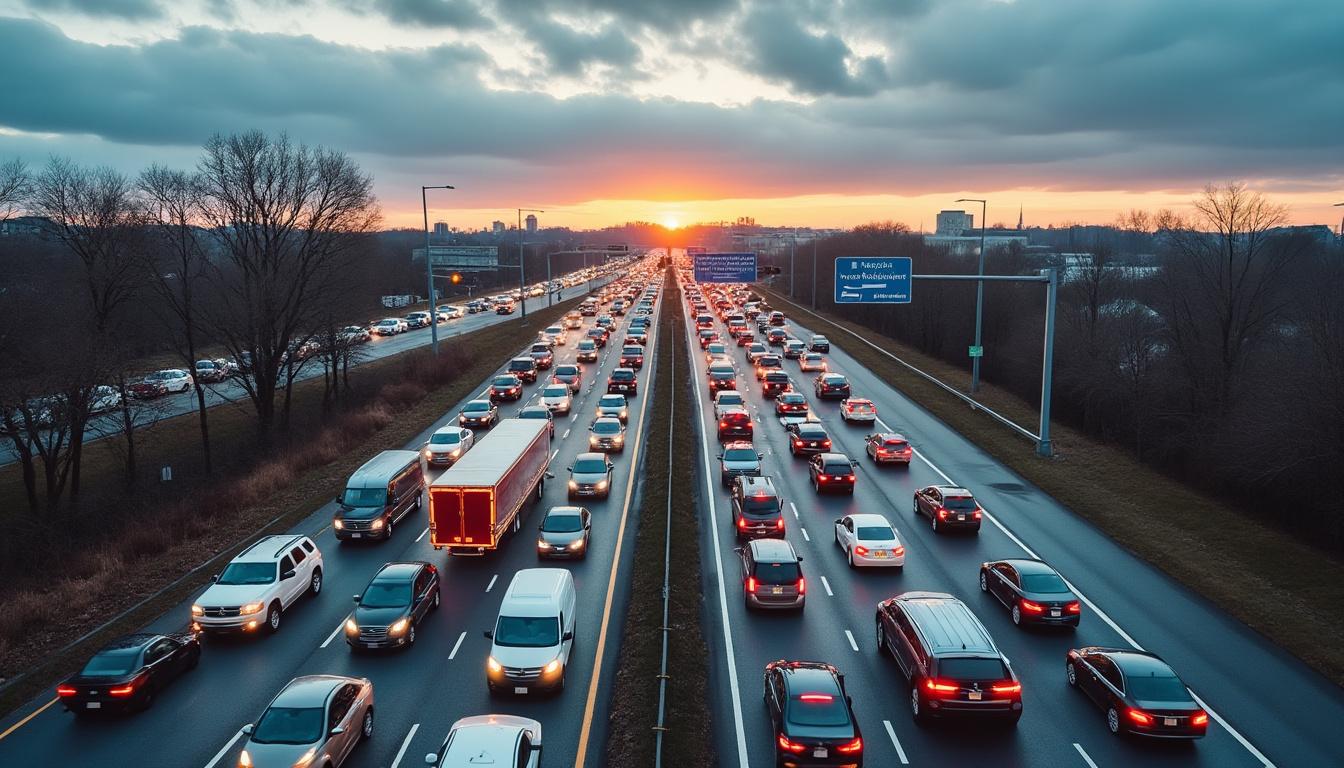
Expect Peak Congestion on Tuesday and Wednesday Before Thanksgiving
The latest travel alert highlights that significant peak congestion is expected on the Tuesday and Wednesday before Thanksgiving, with analytics firms and travel organizations warning of a historic surge in movement. Transportation data from INRIX and advisories from AAA indicate that the busiest windows will concentrate in the afternoon and evening, particularly between 11 a.m. and 9 p.m. This pattern reflects a growing trend: travelers opting for midweek departures to maximize time at destinations while still returning during the traditional Sunday homecoming.
Understanding why these specific days amplify holiday traffic begins with patterns in work schedules and school calendars. Many employers allow remote work early in the week, and families with school-age children often depart as soon as classes end, creating cascading demand on highways and at airports. When a large share of travelers aim for similar time windows, even modest incidents or weather can translate into prolonged travel delays and widespread road congestion.
Data Points and Predictors
Key indicators that point to the intense afternoon rush include projected vehicle counts, historical congestion spikes, and flight booking densities. For instance, INRIX forecasts indicate a possible 80% increase in travel times during the worst congested windows on those days. Meanwhile, FAA projections show thousands of daily flights around this period, compounding the pressure on major hubs.
- Projected busiest days: Tuesday and Wednesday.
- Peak windows: 11 a.m. to 9 p.m., with evening spikes near 7 p.m.
- Main contributors: work-leave scheduling, school breaks, and concentrated flight departures.
| Metric | Typical Value | Expected Thanksgiving Week Value |
|---|---|---|
| Travel time increase | 15–30% | Up to 80% |
| Peak travel hours | Afternoon/evening | 11 a.m.–9 p.m. |
| Estimated travelers | Varies | ~82 million |
Practical signals to watch include weather advisories that might turn a moderate surge into gridlock, and traffic incidents that ripple across corridors. For travelers planning departures, departing before 11 a.m. on Tuesday or Wednesday is widely recommended to avoid the worst outbound congestion.
- Leave before 11 a.m. if driving out of major metros.
- Expect the highest delay risk in late afternoon and early evening.
- Monitor local advisories and consider alternate routes in advance.
Case in point: a hypothetical traveler named Lina Harper plans a midweek departure to visit family. By shifting the departure to mid-morning she avoids being stuck in the 7 p.m. evening surge, illustrating how small timing adjustments can yield large time savings.
This preparatory snapshot is vital: the travel advisory clarity for the week ahead helps travelers allocate extra margin, choose alternative windows, or pivot to less congested corridors. Insight: prioritizing an early departure can transform a potential nine-hour ordeal into a manageable journey.
Practical Travel Planning to Beat Peak Congestion
Smart travel planning is the cornerstone of navigating the holiday rush. Practical measures include adjusting departure times, choosing secondary airports, and structuring the itinerary to avoid common choke points. These actions reduce exposure to the worst traffic update scenarios and minimize the chance of being trapped by prolonged travel delays.
One effective tactic is to stagger departures across a travel party. If a family can split arrivals by a few hours, the odds of all members hitting the exact same congestion wave drop dramatically. Another approach is modal flexibility — combining driving with rail or short-haul flights can circumvent the busiest corridors.
Actionable Planning Checklist
A compact checklist simplifies decision-making. Below is an actionable list that travelers can adapt depending on their mode of transport and risk tolerance.
- Choose departure windows before 11 a.m. to avoid peak outbound times.
- Book earlier returns before 10 a.m. on Friday/Saturday, or after 8 p.m. on Sunday/Monday.
- Research and reserve parking or transit passes in advance, especially near busy hubs.
- Prepare an alternate-route plan and download offline navigation maps.
- Keep flexible accommodations or refundable bookings when possible.
| Strategy | Why It Helps | Example Scenario |
|---|---|---|
| Depart before 11 a.m. | Avoids most afternoon congestion waves | Leave at 9 a.m.; arrive mid-afternoon with less delay |
| Use secondary airports | Less crowded security and lower chance of delays | Fly into a regional airport and rent a car for final leg |
| Stagger travel times | Reduces likelihood of being affected by the same incidents | Family splits into morning and afternoon departures |
External resources can enhance planning. For instance, travelers seeking broad seasonal advice can consult general guides such as the summer travel strategies or targeted guidance like the Thanksgiving travel tips. These resources provide adaptable tactics that apply across holidays.
For those balancing parking logistics and airport access, a dedicated article on airport parking and access will be useful; details like reserved lots and shuttle services can shave valuable time off the door-to-gate journey. Similarly, advice meant for chaotic weekends can translate well to the Thanksgiving period — see recommendations on travel tips for busy weekends.
- Pack essentials for unplanned delays (medications, snacks, chargers).
- Keep a printed itinerary and copies of confirmations in case mobile networks become congested.
- Use travel insurance for flexibility against severe disruptions.
Case study: Lina uses a phased-departure plan and books her return after the Sunday peak. Her result: more restful travel days and fewer unexpected stops. Insight: careful travel planning reduces exposure to the worst of the holiday crush and improves overall travel experience.
Managing Holiday Traffic and Road Congestion: Strategies for Drivers
Managing road congestion during the holiday rush requires both preparation and adaptive behavior while on route. Drivers face the brunt of the surge: long stretches of slow-moving traffic, limited services at rest areas, and greater accident risk. Proper vehicle readiness and a calm, flexible mindset directly mitigate these risks.
Pre-trip vehicle checks are foundational. Tires, fluids, lights, and brakes should be inspected several days before departure. In colder regions, antifreeze levels and battery health become especially important, because weather often compounds delays during late-November travel windows.
Driver-Focused Preparations
A focused list of tasks ensures vehicles and drivers are aligned for long hauls.
- Complete a comprehensive vehicle inspection three days prior to departure.
- Pack an emergency kit: blankets, first aid, flashlight, flares, and non-perishable food.
- Plan fuel stops outside peak hours to avoid long lines at busy stations.
- Rotate drivers if possible to maintain alertness and reduce fatigue-related incidents.
| Preparation Item | Recommended Action | Why It Matters |
|---|---|---|
| Tire pressure and tread | Check and adjust to manufacturer specs | Reduces blowout risk and improves fuel efficiency |
| Emergency kit | Include warm clothing, food, water, and tools | Essential during prolonged stops caused by incidents |
| Navigation backup | Download offline maps and plan alternate routes | Avoids reliance on real-time data that may lag during high traffic |
On the road, traffic etiquette and decision-making become critical. Maintaining steady speed, avoiding abrupt lane changes, and using turn signals early help traffic flow and reduce secondary incidents. In heavy congestion, suppressing impatience and following posted guidance from transportation officials prevents accidents that could extend delays for hours.
- Keep a safe following distance to allow for sudden stops.
- Use rest areas at off-peak times to avoid competition for limited spaces.
- Consider slower scenic routes during peak hours to trade time for a less stressful experience.
An illustrative narrative follows Lina Harper’s drive from a Midwest suburb to a coastal city. Opting for a mid-morning start and a slightly longer but less congested coastal route, Lina encountered steady progress instead of gridlock. She also used local radio and a navigation app to bypass an accident that had closed a major interchange. The outcome: a smoother journey and fewer unexpected stops.
Local resources can be indispensable. For example, tips about parking at specific airports or in dense downtowns can remove friction — a recommended read includes practical airport parking guidance and regional travel tips such as McGhee Tyson parking tips.
- Stay updated via local DOT feeds for closures or lane reductions.
- Keep snacks and hydration on hand to minimize unnecessary stops.
- Allow extra time for rest and stretching to preserve alertness.
Final insight for drivers: meticulous preparation and flexible en-route choices convert potential holiday ordeal into a controlled travel experience.
Air Travel and Public Transit During Thanksgiving Travel Surge
Airports and public transit systems confront their own forms of congestion during the Thanksgiving period. The FAA has predicted record-high travel counts in recent advisories, indicating stress on security checkpoints, boarding gates, and ground operations. For those choosing the skies or rail, awareness of peak windows and proactive actions will minimize travel delays.
Air travelers confront concentrated peaks too: certain days and hours see the highest volume of departures and arrivals. Tuesday is often singled out as an exceptionally busy day, with the FAA projecting tens of thousands of daily flights. This aggregation increases the likelihood of ripple effects from weather disruptions or mechanical issues.
Strategies for Smooth Air and Transit Journeys
Small operational changes can have outsized benefits: arrive earlier than usual, reserve seat assignments and gates ahead of time, and enroll in trusted traveler or priority boarding programs if available. Similarly, public transit riders should verify holiday service schedules, which sometimes reduce frequency or alter routes.
- Arrive at the airport well ahead of standard recommendations during peak days.
- Use mobile boarding passes and verify gate changes frequently.
- Reserve parking or pre-book transit where possible to reduce last-mile uncertainty.
| Mode | High-Risk Window | Mitigation Tip |
|---|---|---|
| Domestic Air | Tuesday afternoon–evening | Arrive 2–3 hours early, monitor airline alerts |
| Regional Rail | Late afternoon departures | Book reserved seating; check for supplemental trains |
| Public Transit | Morning and evening commutes | Confirm holiday schedules and use apps for real-time updates |
Parking logistics at busy airports are often overlooked sources of delay. Advanced parking reservations and guidance on remote lots shave transit time to terminals. For regional guidance, consult resources that specialize in airport-specific tips and holiday parking practices.
Helpful links include localized guidance for travelers navigating holiday flights, such as general holiday travel insights and airport parking advice. One recommended resource covers broader holiday travel logistics like those encountered in Lubbock, which offers lessons applicable elsewhere: holiday travel Lubbock.
- Pack carry-on essentials for potential carry-on-only contingencies.
- Check weather at origin and destination to anticipate cancellations.
- Have contingency plans for overnight holds or missed connections.
Case vignette: Lina switched to an early-morning regional flight to avoid the late-afternoon airport crush. By choosing a smaller airport and pre-booking ground transport, she avoided long waiting lines and had a buffer for an unexpected mechanical delay. Insight: strategic airport choices and preparedness reduce exposure to compound delays.
Real-Time Traffic Updates, Apps, and Travel Advisory Resources
Timely information is a decisive advantage when the holiday rush intensifies. Relying on real-time traffic updates and official travel advisories helps travelers avoid bottlenecks and rapidly adapt plans. A curated set of tools — navigation apps, agency feeds, and travel websites — arms travelers with actionable intelligence.
Trusted platforms aggregate reports from sensors, crowd-sourced users, and official DOT feeds to generate a composite view of current conditions. Combining multiple inputs can create redundancy that compensates for any single source’s delay or error.
Recommended Tools and Resource Matrix
Below is a compact resource matrix outlining recommended tools and how they assist travelers during high-congestion periods.
- Navigation apps: provide live reroute suggestions and ETA projections.
- Official DOT and airport advisories: offer verified closure and incident reports.
- Community-driven platforms: supply on-the-ground observations like fueling line lengths or rest area availabilities.
| Resource | Primary Use | How to Use Effectively |
|---|---|---|
| Navigation app (map + traffic) | Rerouting and ETA | Enable live updates and download offline maps |
| State DOT feeds | Road closures and official travel advisories | Subscribe to alerts for planned route updates |
| Airline notifications | Flight status and gate changes | Turn on push notifications and confirm contact info |
In addition to app-based tools, curated written guidance can be instructive. Articles on efficient strategies for holiday travel and how to approach busy travel windows are particularly useful. For instance, reviewing past guidance like additional Thanksgiving travel tips or broader preparedness resources such as air travel strategies helps form a comprehensive plan.
- Set multiple notification channels: app alerts, SMS, and email for redundancy.
- Follow regional traffic accounts on social media for fast situational updates.
- Keep emergency contacts and local tow or service numbers readily accessible.
Practical exercises include rehearsing a rapid pivot: if a primary route becomes untenable, switch to an alternate planned route and notify companions. Lina Harper models this behavior by maintaining a shared group chat with her travel companions, allowing instantaneous coordination when a traffic incident diverts the group.
For readers seeking deeper preparation patterns, resources that cover long weekend strategies and specialized holiday guidance can be invaluable. Examples include comprehensive tips for high-volume holidays and seasonal safety-oriented briefs like travel tips for Fourth of July and guidance aimed at avoiding busy-weekend pitfalls such as travel tips for busy weekends.
- Practice a communication plan with travel companions before departure.
- Have a contingency fund available for unexpected expenses like extra lodging.
- Prioritize mental resilience: patience and flexibility reduce stress and improve safety.
Final insight: leveraging layered information sources and preparing communication contingencies transforms reactive travel into proactive navigation, enabling travelers to move through the holiday period with greater confidence and fewer unexpected setbacks.