

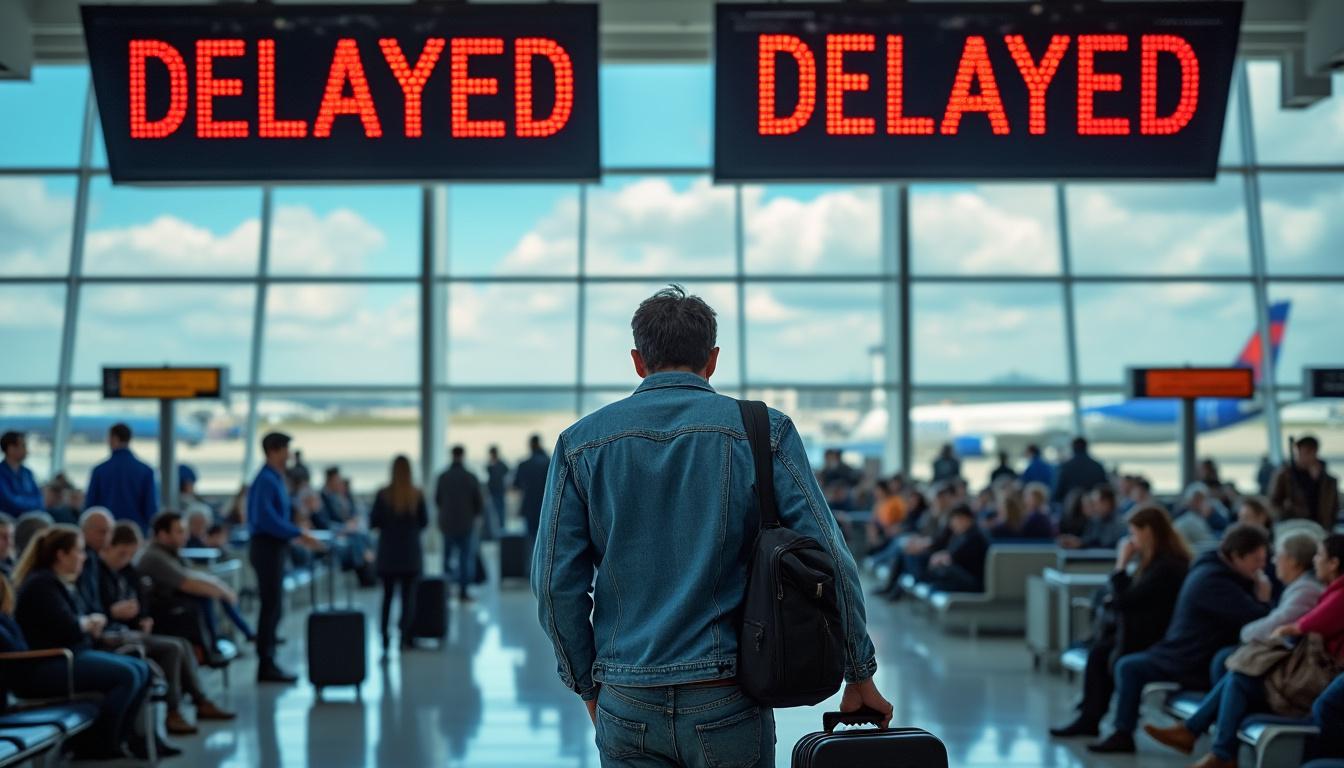
When Your Plane Gets Diverted: Understanding Flight Diversion Causes and Immediate Steps
A sudden announcement about a flight diversion can change the rhythm of any journey and turn a simple itinerary into a complex travel challenge. Passengers often face confusion the moment the captain explains a reroute, and knowing the common causes and immediate responses helps preserve calm and control. The following analysis breaks down why diversions happen, what to expect in the first minutes, and how a character like Alex—on a mission to arrive for an important family event—might make rapid, practical decisions that shape the entire passenger experience.
Flight diversions in 2024 exceeded expectations, with the U.S. Department of Transportation reporting more than 12,000 incidents. Most stem from severe weather, mechanical issues, and on-board medical emergencies, while staffing and air-traffic complications—highlighted during the federal government shutdown—also contributed to spikes in diversions. These causes determine whether a flight circles, diverts to a nearby field, or seeks a more distant airport.
Common Causes and Immediate Passenger Actions
Understanding why an aircraft diverts informs the response. Weather-driven diversions prioritize safety; technical faults prompt grounded inspections; medical events command immediate landing at the nearest suitable airport. Crew decisions balance fuel, aircraft type, airport capacity, and air traffic demand.
- Weather — Expect prolonged circling or a series of redirects to less-congested airports.
- Mechanical — Anticipate on-ground inspections and possible passenger disembarkation.
- Medical — Rapid landing and medical attention may follow, then possible passenger delays.
- Air Traffic Control Load — Queueing at diversion airports can extend time on ground.
- Crew Duty Time — Extended delays may force crew changes and further hold-ups.
Alex’s flight experience illuminates these dynamics: the crew explained a weather closure at the intended field, extended circling exhausted fuel margins, then announced a route to Austin before rerouting again to San Antonio because of congestion. Passengers who had pre-planned choices—rental options, alternate flights, or a readiness to accept on-site hotels—were able to react faster.
| Cause | Typical Passenger Impact | Immediate Airline Response | Suggested Immediate Action |
|---|---|---|---|
| Severe Weather | Circling, rerouting, long ground queues | Alternative airport selection, fuel planning | Conserve device battery, track messages, consider checked-bag implications |
| Mechanical Issue | Possible disembarkation and repair time | Maintenance inspection, passenger care | Document notifications, capture timestamps for claims |
| Medical Emergency | Immediate landing, potential long delay | Coordination with ground EMS, potential aircraft downtime | Follow crew instructions, be ready for ground transfer |
| ATC or Staffing | Extended queues; unpredictable return times | Coordinate with destination authority, rebalance flights | Assess personal alternatives (drive, alternate flights) |
Key immediate steps for passengers can be summarized: stay informed, preserve essential resources, and prepare alternatives. Alex kept carry-on essentials accessible, tracked messages from family, and calculated driving time and rental costs as contingency options. These simple actions reduced anxiety and created viable pathways forward.
- Check and conserve phone battery and portable charger.
- Identify whether luggage is accessible if the aircraft is parked away from the terminal.
- Ask crew about local facilities and expected timelines.
Those first choices determine momentum: choosing to remain on a plane parked in a cargo area differs fundamentally from deplaning into a terminal where baggage retrieval and onward travel options exist. In short, grasp the cause, accept the constraints, and make choices that protect time and connectivity. A clear immediate action is the foundation of smarter decisions that follow.
10 Practical Travel Tips for Managing a Diverted Plane and Reducing Stress
When a diversion turns a routine trip into an extended ordeal, practical travel tips can transform frustration into proactive problem-solving. The focus should be on minimizing disruption, safeguarding essentials, and keeping stress management front and center. A robust checklist and a calm mindset enable passengers to move from passive waiting to active planning.
Actionable Tips and Tactical Examples
Below are ten practical tactics illustrated with examples from Alex’s 10-hour ordeal. Each tip includes a short explanation and a real-world scenario to show how it applies.
- Pack a carry-on survival kit — Essentials: charger, snacks, medication, change of clothes. Alex avoided the worst of the delay because checked bags were unreachable from the cargo area.
- Monitor official channels — Airline apps and gate agents are primary sources; crew announcements provide immediate status. During the circling phase, timely crew updates kept expectations realistic.
- Research alternate routes early — Check other flights, trains, and rental options as soon as diversion is announced. Alex compared a 5+ hour drive and a same-day reroute option.
- Know the luggage implications — If baggage is checked, it may be inaccessible; that impacts clothing and item access. That reality influenced several passengers’ decisions to drive instead of wait.
- Preserve power and data — Limit streaming, send essential messages, and store boarding documents locally. Low battery can sever communication at a critical time.
- Ask for official documentation — Log times and obtain written notes on delays for insurance or claims. Such records made passenger claims smoother afterward.
- Use travel protections wisely — Understand what travel insurance, credit card coverages, and airline policies will reimburse. Some cards offer trip delay coverage that offsets meal and hotel costs.
- Respect crew and fellow passengers — Tense situations escalate quickly; a cooperative atmosphere helps resolve logistics faster. Crew cooperation during Alex’s delay resulted in pizza deliveries that eased tension.
- Plan for crew duty limitations — Recognize that the crew can time out, leading to cancellations or changes. Alex tracked communications to anticipate crew shifts.
- Stay flexible and prioritize — Decide whether being on-site at the intended destination on time is critical, or if safety and comfort take precedence.
These tips offer tactical responses and psychological relief. For example, when a flight is diverted to an airport without terminals accessible immediately, passengers who had portable hotspots and offline maps could coordinate local rides and accommodations more effectively.
- Prepare — Packing and pre-checking alternatives
- Monitor — Communication with airline and family
- Act — Choosing whether to remain, rebook, or self-transport
| Tip | Why It Matters | Quick Example |
|---|---|---|
| Carry-on survival kit | Supports comfort and continuity when checked bags are unavailable | Alex accessed medication and snacks while others waited hours without essentials |
| Alternate route research | Provides options if airline cannot re-accommodate | Comparing a rental car vs. train saved one passenger from missing a connection |
| Document delays | Important for claims and reimbursements | Written timestamps simplified an insurance claim after the event |
Inspiration can be practical: seeing the diversion as a problem to be solved invites creative solutions rather than panic. The combination of preparation, quick information gathering, and calm negotiation with airline representatives yields the best outcomes. Keep that mindset ready—every delay is also an opportunity to exercise planning skills and resilience.
Understanding Your Rights and Airline Communication During a Flight Diversion
When a flight diverts, understanding the interplay between airline communication, policy obligations, and passenger rights empowers better choices. Airlines balance safety and logistics, and their customer service plans typically define provisions for accommodation, meals, and transportation in many scenarios. Knowing those parameters prevents unnecessary out-of-pocket spending and improves negotiation outcomes.
Airline Policies, Federal Guidance, and Passenger Options
Airlines maintain customer service plans that spell out what passengers can expect during disruptions. For instance, some carriers provide hotel rooms if passengers are not at their final destination by a certain hour, along with transfers to and from accommodations. Meal vouchers commonly apply if delays extend beyond three hours in a diversion city. These policies vary, and tactical documentation of incidents helps with later claims.
Government oversight also plays a role. In the U.S., the Department of Transportation monitors and reports diversion trends and enforces transparency in communication. For international travel, EU and UK regulations offer different compensation rules that can affect re-routing and reimbursement. A savvy traveler navigates these frameworks to secure proper service.
- Ask the crew for written confirmation — Request a concise note about the reason for the diversion, local arrival time, and expected holding period.
- Check the airline’s official app — Rebooking options and voucher information often appear first in digital channels.
- Know the hotel’s cut-offs — Hotels may be limited by airline blocks; early coordination can secure rooms for groups.
Alex observed clear differences in experiences across passengers: those who documented messages and made timely alternate bookings avoided last-minute decisions. Others who relied solely on verbal updates faced longer waits and more uncertainty. It’s important to remember that if passengers choose to pursue alternatives independently (car rentals, third-party hotels), airlines may not reimburse those costs unless explicitly stated in policy or authorized by an airline representative.
| Aspect | Typical Airline Responsibility | Passenger Action |
|---|---|---|
| Hotel Accommodation | Provided if passenger not at destination by specified hour | Confirm eligibility, obtain written confirmation for claims |
| Meals | Vouchers often given for long ground delays | Keep receipts and note times |
| Transport to Hotel | Shuttles or taxis arranged by airline | Confirm pick-up points and times |
Travel insurance and certain credit cards can provide supplementary protection. Policies differ: some cover meals and lodging after a set delay; others require a minimum duration or specific reason. Documentation is crucial: timestamps, crew announcements, and any written confirmations support claims. In Alex’s case, early note-taking and copy of app notifications expedited reimbursement discussions later.
- Retain digital screenshots of flight status and airline messages.
- Request formal documentation when offered ground services.
- Check credit-card and travel-insurance policies before departure.
Ultimately, assertive but polite communication unlocks options: airlines are more likely to implement accommodations when passengers present clear, documented needs. Recognizing policy limits and preparing backup plans is the best strategy for minimizing the long-term cost and inconvenience of a flight disruption.
Airport Management, Ground Handling, and Smart Travel Planning Choices
Airport management and ground handling practices shape the real outcome of a diversion. Congestion at the diversion field, cargo-area parking, and shuttle logistics determine whether passengers can access terminals or remain onboard. Recognizing these operational realities supports better travel planning and faster resolution during disruptions.
What Happens on the Ground and How to Use That Knowledge
When a diverted plane lands at a secondary airport, airports and airlines coordinate allocation of gates, buses, and ground crews. In some cases, diverted aircraft are queued on the tarmac in cargo zones, temporarily blocking access to the terminal. That was the case for Alex: passengers on the ground could not retrieve checked bags and were only allowed to depart the aircraft after shuttle arrangements were made.
- Cargo-area parking — Often means no immediate terminal access or baggage retrieval.
- Gate availability — Airports prioritize arriving flights; diverted planes may remain mobile until a gate opens.
- Baggage logistics — Checked luggage may remain bound for the original destination, complicating immediate plans.
In response, effective travel planning includes pre-trip research on alternative airports, realistic drive times, and local transport availability. Alex compared a five-hour drive and rental rates against the airline’s projected reflight times. This kind of pre-check converts uncertainty into measurable choices.
| Ground Factor | Passenger Implication | Recommended Planning Action |
|---|---|---|
| Gate Scarcity | Delays in disembarkation and shuttle needs | Have offline maps and local taxi apps ready |
| Baggage Routing | Checked bags may not be accessible | Always pack essentials in carry-on |
| Shuttle Coordination | Delays while waiting for ground transport | Confirm shuttle windows and alternatives |
Airport managers prioritize safety and throughput. In peak diversion events, airports can be overwhelmed by dozens of inbound flights, creating multi-hour queues. This reality underscores the value of flexible scheduling for critical events, like weddings or conferences, where delayed arrival might derail plans. Practical travel planning involves adding buffers and having contingency contact strategies to inform hosts or organizers of changing arrival times.
- Map alternate airports within driving distance before travel.
- Bookmark local rental and rideshare services on your phone.
- Notify key contacts immediately with realistic arrival scenarios.
Airports and airlines must coordinate quickly to move passengers forward, but passengers also carry responsibility: packed essentials, realistic expectations, and a readiness to take alternative transport can change the outcome. In short, understanding airport management mechanics turns confusion into a strategic advantage.
Stress Management and On-Board Strategies During Long Flight Delays and Diversions
Extended time on an aircraft or in a diversion airport tests both logistics and emotional reserves. Prioritizing mental well-being is as important as arranging alternatives. Practical stress management techniques and on-board strategies help preserve composure and improve decision-making under pressure.
Techniques, Routines, and Practical Comfort Measures
Calm-focused practices reduce the physiological effects of stress and enable sharper decisions. Breathing exercises, short movement routines, and structured communication can keep morale steady. In the case of Alex and many fellow passengers, small acts—sharing food, cooperative problem-solving, and structured updates from crew—shifted group energy from agitation to collaboration.
- Controlled breathing — Simple cycles of slow inhales and exhales reduce heart rate and sharpen thinking.
- Micro-movements — Simple stretches and seat exercises reduce discomfort and maintain circulation.
- Social connection — Strategic conversation or collaborative planning with nearby passengers can produce solutions faster.
Practical on-board strategies include rationing snacks, rotating device usage among family members to preserve battery, and designating one communicator to manage rebooking or information exchanges. Alex’s group assigned one person to handle online searches and another to manage communications with relatives, creating a clear division of labor that reduced redundant effort and stress.
| Strategy | Purpose | Concrete Example |
|---|---|---|
| Carry-on essentials | Sustain comfort when luggage inaccessible | Medication and change of clothes preserved comfort during long waits |
| Shared responsibilities | Reduce cognitive load and conflicting actions | One person handled alternate bookings while others kept devices charged |
| Polite assertiveness | Secure clarity from crew without conflict | A calm group representative negotiated meal vouchers and rebooking details |
- Pack lightweight comfort items (neck pillow, eye mask) in an accessible place.
- Limit news and social media that escalate stress; prioritize direct channels.
- Plan short naps if timing permits; even brief rest sharpens decision-making.
Finally, maintain perspective: diversions are disruptive but manageable events. Documentary evidence, measured actions, and calm collaboration produce better financial and emotional outcomes. Travelers who prepare for contingencies, understand airline and airport dynamics, and apply deliberate stress-management strategies are more resilient. That preparedness converts uncertainty into actionable steps and preserves the possibility of arriving with dignity and purpose. This insight—preparation plus calm action—creates the strongest response to any flight delay or diversion.