

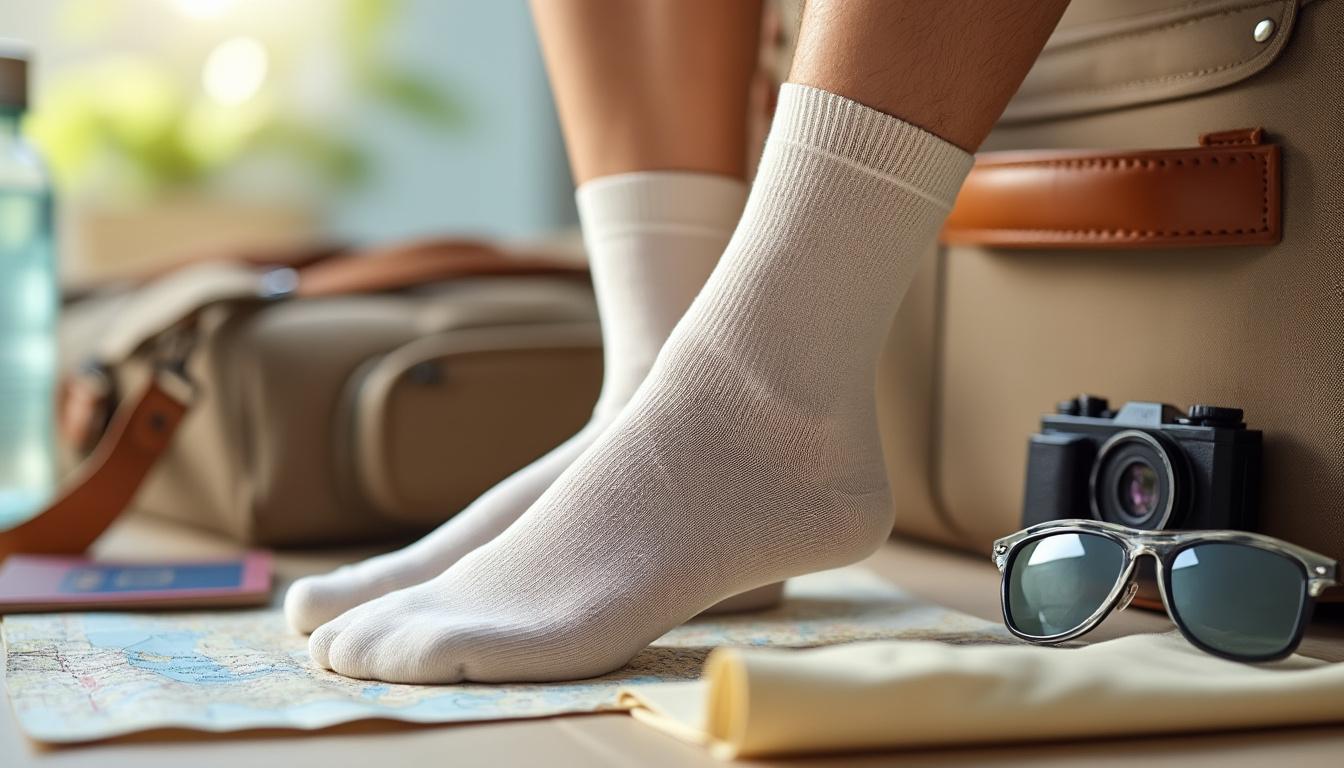
Why Compression Socks Are A Travel Essential For Every Journey
The modern traveler looking for both function and comfort will quickly discover that compression socks are more than a niche item — they are a travel essential. Long-haul flights, hours on trains, and marathon conference days all place stress on the lower limbs. This stress often manifests as swelling, aching, or that heavy, fatigued sensation that slows down the first day of any trip. By applying graduated pressure — tighter at the ankle, lighter toward the calf — these socks actively support circulation and reduce pooling of blood and fluids in the lower extremities.
The problem is familiar: a traveler boards a plane after a full day of packing and arrives at the destination ready to rest, only to find shoes that pinch because ankles have swollen. The simple solution: a pair of cozy, well-fitting compression socks tucked into carry-on luggage. Their ergonomic fit helps prevent swelling and offers a measurable improvement in how legs feel after long periods of immobility.
How Graduated Compression Works: Science and Practical Effects
Graduated compression applies a defined pressure gradient from the ankle up the leg. This gradient promotes venous return—blood moves more efficiently from the feet back to the heart. The mechanical effect reduces capillary leakage that leads to edema and eases venous reflux associated with varicose discomfort. In practical terms, this means fewer achy nights after travel, reduced risk of deep vein thrombosis on long flights, and an overall boost in energy when exploring a new city.
For travelers with preexisting circulation concerns, the 20–30 mmHg category is commonly recommended during travel. Wearing this level during flights or long drives supports blood flow without compromising comfort. For those without medical concerns, lower-pressure compression can still offer measurable relief and improved endurance when walking or standing for extended periods.
Real-World Case: The Traveler’s Companion
Consider a fictional traveler, Marin, who commutes across time zones for work. Before adopting compression socks, Marin routinely suffered from sore calves and tight-fitting shoes. After incorporating a compact set of these socks into carry-on gear, the difference was immediate: reduced swelling, easier mobility upon arrival, and less lingering fatigue at the end of the day. This practical anecdote mirrors thousands of user reports that praise the immediate comfort gains and the longer-term protective benefits.
Key features contributing to success include a snug ankle fit, breathable knit to prevent moisture buildup, and reinforced soles to absorb impact while walking. When paired with light leg stretches and periodic walking during layovers, the socks become a fundamental part of a traveler’s foot-care routine.
Insight: Treating compression socks as a standard component of travel gear transforms long journeys from draining ordeals into manageable transitions that preserve energy for exploration.
How Cozy Compression Socks Improve Comfort On Long Flights And Shifts
For many, comfort on the move is non-negotiable. Whether seated in economy for twelve hours or working a twelve-hour nursing shift, the right pair of cozy compression socks can be a game-changer. Materials matter: a polyester-spandex blend offers stretch and retention, while moisture-wicking knits keep feet dry and reduce friction. The addition of a seamless toe decreases irritation, and soft, thick cushioning underfoot absorbs shock during prolonged standing and walking.
When assessing comfort, pay attention to the construction: reinforced heels and cushioned soles reduce the risk of overuse injuries, especially on hard floors. The socks should maintain compression through repeated washes so that the initial supportive fit doesn’t diminish over time. Look for products that advertise a balance of support and flexibility — this blend ensures comfort without the restrictive feel some medical-grade garments can present.
Scenario-Based Benefits: Flights, Hospitality, and Active Travel
On a long-haul flight, sitting motionless for hours raises the risk of swelling and discomfort. Simple in-seat ankle pumps and occasional walks along the aisle help, but the addition of compression socks amplifies circulation benefits passively. In hospitality or retail jobs that involve long periods on the feet, compression socks help maintain energy levels across a shift, reducing leg soreness and facilitating quicker recovery between shifts.
Runners and active travelers also gain from compression wear. These socks accelerate recovery after intense activity by supporting venous return and minimizing microtrauma to fatigued muscles. For multi-day treks, packing a set of these socks offers a dual advantage: wear during activity for support, then sleep with them on post-exertion to promote recovery.
- Improved circulation during prolonged sitting and standing
- Reduced swelling for flights and long drives
- Better endurance and quicker post-activity recovery
- Moisture management and reduced friction with seamless toes
- Long-term durability that preserves compression after many washes
Travel planning content often pairs well with these practical items. For instance, readers aiming to optimize carry-on space and comfort can find robust advice in guides that cover long-haul packing strategies. Integrating compression socks into a packing list is a small adjustment that returns daily comfort for the duration of a trip.
Customer feedback often cites dramatic differences: arriving in a new city feeling ready to explore rather than tired and swollen. The combination of breathable knit and targeted pressure provides a consistently comfortable experience for a wide variety of travelers.
Insight: Thoughtful material choices and ergonomic design turn compression socks into indispensable comfort tools for both airborne travel and ground-based work.
Maximizing Foot Care And Circulation: Practical Tips, Exercises, And Use Cases
Foot care is an underappreciated pillar of travel wellness. The simple act of wearing compression socks is one component of a broader strategy that includes mobility, hydration, and targeted exercise. These elements collectively support circulation and stave off discomfort, especially on prolonged journeys or demanding itineraries.
This section outlines a set of actionable measures travelers can implement before, during, and after travel. Each recommendation is paired with an explanation of why it helps, ensuring a clear cause-and-effect understanding.
Pre-Travel Preparations and On-Trip Practices
Start by choosing the right pressure rating for personal needs; for most travelers, 20–30 mmHg provides noticeable support. Pair compression wear with simple stretches before boarding: calf raises, ankle circles, and hamstring loosening help prepare the muscles and joints. Hydration plays a crucial role; staying hydrated reduces blood viscosity and supports microcirculation.
During travel, prioritize motion. Walk the cabin periodically, perform seated ankle pumps and heel-toe lifts, and flex toes regularly. Even small movements accelerate venous flow and reduce chances of clot formation. Upon arrival, elevate legs for short intervals if practical to allow fluids to redistribute and ease any lingering swelling.
Exercises To Enhance Circulation
Three effective exercises are particularly useful: seated ankle pumps, standing calf raises, and supine leg elevation. Seated ankle pumps are performed by repeatedly pointing and flexing the feet for 60–90 seconds every 30–60 minutes. Standing calf raises can be done in place during layovers or breaks — rise onto the toes and slowly lower, repeating 15–20 times to increase venous return.
For more systematic packing and mobility advice, travelers focused on minimizing hassles can consult expert carry-on techniques like those detailed in expert carry-on packing tips. These guides often recommend compact recovery items — compression socks included — to maintain wellness on the road.
| Compression Level | Typical Use Case | Expected Benefit |
|---|---|---|
| 8–15 mmHg | Everyday comfort | Light support for mild fatigue and prevention |
| 15–20 mmHg | Travel and minor swelling | Moderate circulation boost and reduced edema |
| 20–30 mmHg | Long flights, prolonged standing, varicose discomfort | Strong support for circulation and recovery |
Pairing compression socks with deliberate movement forms a comprehensive approach to foot care. For retirees or seniors planning extended journeys, tailored advice on maintaining safe mobility while traveling is available in focused resources such as seniors travel tips.
Case study: a professional chef who spends 12-hour shifts reported a marked decrease in end-of-day soreness after integrating a rotation of cushioned compression socks and nightly elevation routines. This combination reduced recovery time and improved readiness for subsequent shifts.
Insight: Compression socks work best as part of an active foot-care strategy — combine them with movement, hydration, and targeted exercises to preserve mobility and comfort on every trip.
Finding The Best Deal: How To Secure Discounts, Sales, And Savings On Compression Socks
Smart shopping turns a simple comfort item into a major source of savings. The market frequently features promotions that drop prices dramatically, and understanding where to look and how to act can yield real financial benefits. Currently, a three-pack deal hitting $13 — marked down from $27 — represents a clear example: a 50% off sale that makes it easy to stock up for multiple trips or to outfit family members.
Why act decisively? Promotional windows often close quickly. Neutral-colored packs tend to be the most discounted options, and bulk purchases can reduce per-pair cost further. For those with Prime membership, free shipping accelerates delivery so the socks arrive ahead of a trip.
Tactical Steps For Deal Hunting
Start by tracking prices on major retailers and setting alerts where possible. Compare offer specifics — does the list price include multiple sizes? Are returns accepted if the fit feels off? Check product pages for user metrics; a popular product might feature tens of thousands of reviews and thousands of units sold in recent weeks, indicating both demand and reliability.
- Monitor price history and set alerts on retail platforms.
- Favor neutral colorways for the deepest discounts.
- Buy multi-packs to lower the per-pair cost when planning multiple trips.
- Verify shipping and return policies to avoid surprises.
- Read recent user reviews for real-world durability and comfort reports.
Consider timing purchases around major sales cycles. End-of-season clearances, travel-focused promotions, and membership events often feature elevated savings. In some cases, product restocks can push prices back up quickly, so preparedness and decisive checkout are recommended.
Example anchor to packing advice: pairing purchase decisions with smart packing minimizes unnecessary purchases at the destination. For those concentrating on compact travel, guides like packing tips for carry-on can help allocate luggage space efficiently, making a three-pack both practical and cost-effective.
Consumer reviews provide color to numerical savings. Reports across user segments — nurses, servers, frequent flyers — highlight real benefits such as sustained compression retention after many washes and the combination of comfort and support that keeps legs feeling fresh.
Insight: Finding the right deal requires strategy: monitor prices, choose neutral tones for deeper discounts, and buy multi-packs when preparing for multiple trips to maximize value.
Choosing The Right Pair: Sizing, Materials, And Real Traveler Stories
Selecting the ideal compression sock depends on sizing precision, material preference, and anticipated use cases. Proper fit prevents slipping and pinching; a wrong size can negate benefits. Many products offer size charts based on ankle and calf measurements. Before purchasing, measuring these dimensions and comparing them against manufacturer guidance ensures a better outcome.
Materials play a dual role: they determine both breathability and compression retention. A blend with spandex ensures elasticity and shape retention, while polyester or cotton components affect moisture control and softness. Reinforced soles and seamless toes add to long-term comfort and durability, especially when shoes are worn for extended walking.
Traveler Stories: How Real Use Shapes Expectations
Consider three archetypal travelers: a nurse working rotating shifts, a parent juggling long layovers with active children, and a retiree embarking on multi-week exploration. Each found unique advantages from compression socks. The nurse appreciated daily support that reduced end-of-shift heaviness. The parent leveraged socks to reduce swelling during transatlantic flights and to manage a sprained ankle temporarily. The retiree used them to maintain mobility during long walking tours.
These stories underscore practical trade-offs. Some reviewers requested more foot cushioning, a design tweak that manufacturers can address through thicker sole layers. Others praised the perfect balance of pressure and softness that allowed easy donning and removal without compromising on support.
For travelers seeking broader packing wisdom, resources such as travel light carry-on tips and genius packing hacks align well with the goal of including compression socks in a compact, efficient kit.
Practical selection checklist:
- Measure ankle and calf to ensure a snug but comfortable fit.
- Choose materials that balance breathability and compression retention.
- Opt for neutral colors for versatility and potential discounts.
- Look for seamless toes and cushioned soles for added comfort.
- Check wash-care instructions to preserve compression over time.
Each of these criteria helps travelers make informed choices that match lifestyle and itinerary. The payoff is tangible: less downtime, fewer aches, and more active enjoyment at the destination.
Insight: Deliberate selection—based on fit, fabric, and use—transforms a simple garment into a reliable ally for comfort, recovery, and sustained exploration.