

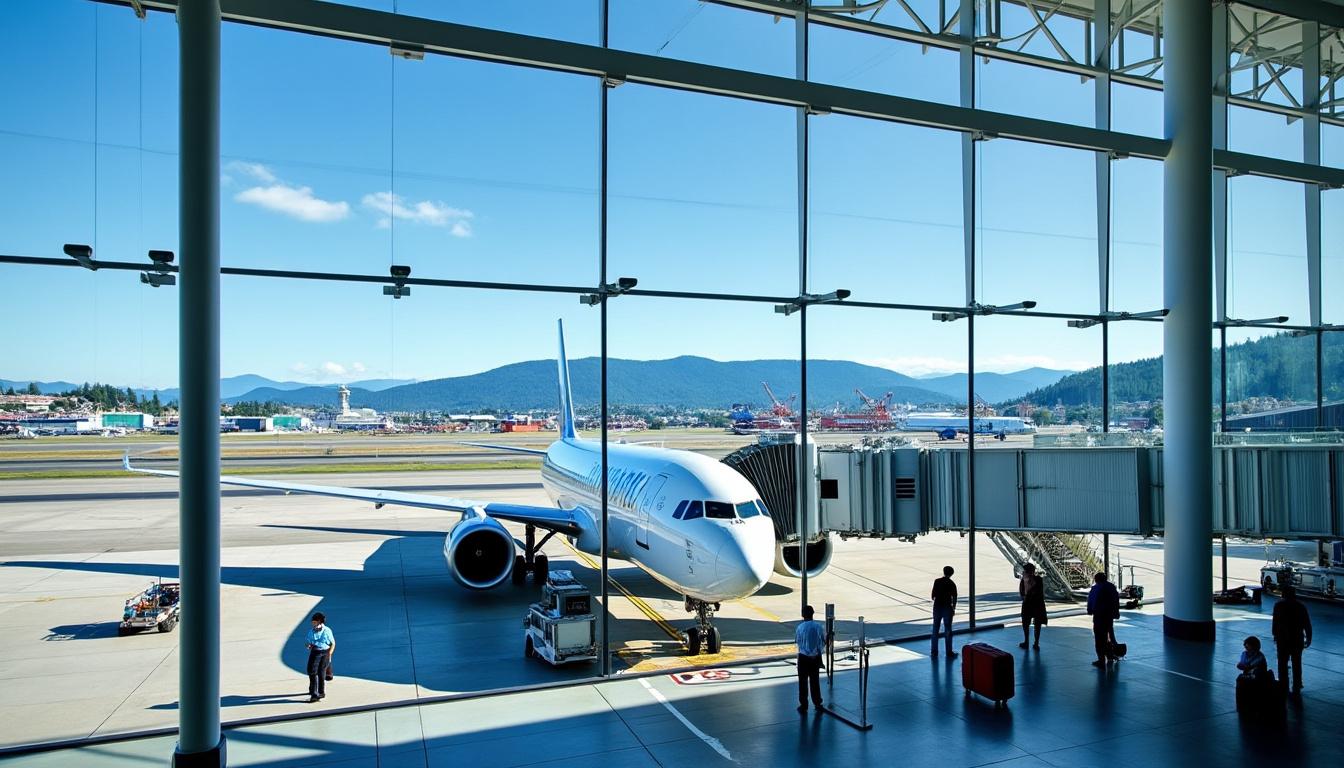
SeaPort Airlines Launches New Daily Flight Route Between Seattle and Spokane
The announcement that SeaPort Airlines will begin a new service connecting Seattle and Spokane marks a pivotal moment for short-haul air travel in the Pacific Northwest. Beginning March 9, the carrier unveiled a schedule that restores and modernizes a downtown-to-downtown option, operating an initial cadence described as eight daily flights between Seattle’s Boeing Field and Spokane’s Felts Field. This expansion leverages an approach to regional travel that prioritizes predictability, minimal airport friction and rapid door-to-door travel times.
Operationally, the route is built around four round-trip rotations each day—two in the morning and two in the evening—designed to serve both business commuters and leisure travelers. The carrier positions Boeing Field as an alternative to the busier international hub, emphasizing the benefits of shorter wait times and easier access for city-center passengers. Ticketing policies emphasize simplicity: fares for the new route start at $299 one way, with a promotional offer of a 32% discount available through April using the code SFF32, a nod to the historic 1932 Felts Field terminal.
What Travelers Need to Know About the New Daily Flight
For passengers planning to use the new route, several practical points define the experience. Check-in is streamlined, with the airline advising travelers to arrive roughly 20 minutes prior to departure. The absence of extended TSA queues at Boeing Field and Felts Field creates a different rhythm: instead of arriving two hours early, a commuter can aim for a tight schedule that moves from vehicle to gate rapidly.
Reservations are direct through SeaPort’s booking portal, and the pricing aligns closely with what passengers might pay booking with larger carriers a few days in advance. The carrier cites comparable price points to Alaska Airlines when purchased about three days before travel—positioning the route as competitive on both cost and convenience.
Key Service Details at a Glance
Below is a concise schedule snapshot and notes on what the new service will provide to travelers and the region.
| Service Aspect | Details |
|---|---|
| Start Date | March 9 (service launch) |
| Frequency | Eight daily flights (four round trips) |
| Origin / Destination | Boeing Field (Seattle) — Felts Field (Spokane) |
| Starting Fare | $299 one way (with promo SFF32 through April) |
| Booking | Direct via SeaPort Airlines website |
For many frequent travelers between these cities, the introduction of this daily flight reshapes the options. It offers consistency for those scheduling day trips and a predictable pace for companies balancing remote work with essential in-person meetings. This route signals a renewed focus on nimble, commuter-oriented air transportation in the region.
Key insight: the launch represents a deliberate shift toward rapid, low-friction hops that make short regional trips both practical and time-efficient.
How Boeing Field Reinvents Regional Travel in the Pacific Northwest
The decision to center the new Spokane flights at Boeing Field underlines a strategic view of airport assets. As larger hubs become congested and optimized for long-haul traffic, smaller, centrally located fields provide a different form of value: proximity, speed and a tailored passenger experience. The carrier argues that the region’s dominant international hub has outgrown the short-hop market, and that revitalizing Boeing Field can restore an old model of efficient local air travel.
In practical terms, Boeing Field offers quick access to downtown Seattle, ample parking and a simplified security flow that contrasts with the time sinks prevalent at busier airports. These characteristics make it possible to compress total travel time for a typical Seattle-to-Spokane trip into a window that competes with ground transport, particularly when factoring in dedicated commute times and the unpredictability of traffic.
Air Transportation Trends and the Return of Short-Haul Shuttles
Across the Pacific Northwest, a resurgence of shuttle-style services reflects changing traveler priorities. Commuters and small businesses increasingly value reliable, frequent flights that link urban cores rather than distant hub-to-hub connections. SeaPort leverages this trend, extending a pattern already visible in its existing network where shuttle operations between Boeing Field and Portland International Airport reach high daily frequencies—up to 16 flights on peak days.
Repositioning Boeing Field as a people’s airport also resonates with a broader cultural appreciation for heritage aviation and local connectivity. The move recalls a period when regional aviation thrived on short hops linking communities directly, a model that once defined early commercial aviation in the region.
Case Example: A Corporate Planner’s Perspective
Consider a corporate travel manager coordinating meetings across state lines. By booking the morning shuttle, an executive avoids a two-hour taxi wait from the international terminal, arrives downtown swiftly, and returns on an evening rotation—completing a same-day business itinerary that would otherwise require an overnight stay. For planners, this predictability lowers lodging costs and improves schedule flexibility.
Economically, channeling short-haul traffic to Boeing Field also eases congestion at larger airports, creating a more balanced regional ecosystem. For cities like Spokane, the arrangement provides direct access to Seattle’s business centers without the added friction of long drives to distant terminals.
Key insight: repositioning smaller airports like Boeing Field for high-frequency regional flights can unlock time savings and operational efficiency that large hubs are not designed to deliver.
Passenger Experience: From Downtown to Downtown in Two Hours
At the heart of the announcement lies the promise of a transformed passenger journey. The carrier emphasizes a hassle-free approach: free or convenient parking, minimal security hold-ups and the ability to check in roughly 20 minutes before departure. That combination reduces the traditional overhead associated with flying and converts travel time into productive or comfortable hours rather than hours wasted in terminals and checkpoints.
A narrative thread runs through the practical details: picture a professional named Maya Chen, who commutes weekly between the two cities. Maya parks near Boeing Field, breezes through a compact check-in area and boards a turboprop or small regional jet configured for short hops. By mid-morning she is in downtown Spokane, ready for meetings, and returns on an evening rotation—saving a night in a hotel and the fatigue of long travel.
Felts Field: Historic Runway, Modern Convenience
The Felts Field connection is noteworthy. This marks the first sustained commercial passenger service at the airfield since its activity peaked decades ago, reviving a link that had been dormant for commercial operations since mid-20th century. The carrier honors that heritage with promotional pricing tied to the original 1932 terminal, offering travelers a distinctive connection between past and present.
Operational advantages at Felts Field mirror those at Boeing Field: quick access to downtown Spokane, compact facilities that streamline passenger flows, and an amenity profile suited to short-haul travelers. For leisure visitors, the shorter door-to-gate rhythm converts what used to be a multi-hour burden into an easy daytrip.
List: Benefits of the New Passenger Experience
- Time Efficiency: Downtown-to-downtown in about two hours, reducing overnight stays.
- Reduced Stress: Minimal security queues and quick check-in procedures.
- Cost Predictability: Competitive fares comparable to major carriers when booked in advance.
- Heritage Appeal: Connection to Felts Field’s history and local airport identity.
- Flexibility: Morning and evening rotations support same-day round trips.
Each of these points ties to a practical outcome: less time traveling means more time working, exploring, or resting. The result is a travel experience designed for purposeful, frequent use rather than occasional long-haul norms.
Key insight: by simplifying the passenger journey, the route transforms short-haul flying into a reliable daily tool for both business and leisure travelers.
Economic and Community Effects of SeaPort Airlines’ New Spokane Route
The ripple effects of a new aviation link extend beyond passenger convenience. A steady flow of daily flights fosters business continuity, stimulates tourism and can underpin local hiring in hospitality, ground handling and related services. For Spokane, restoring commercial service to Felts Field creates a story of revival—with tangible economic multipliers.
Local businesses benefit from improved access to Seattle’s markets and a renewed ability to host clients and partners on short notice. Destination marketing gains an asset that emphasizes quick access from a major economic center, while cultural institutions and event planners can attract larger audiences knowing that travel logistics are simplified.
Case Study: A Mid-Sized Firm’s Savings
Consider a hypothetical company, Cascade Tech, that sends engineers for site visits and client meetings. Previously, travel meant overnight stays and lost productivity. With the new rotations, site visits can be scheduled as single-day trips, reducing lodging and per diem costs and shortening project timelines. The freed-up employee time translates into more billable hours and faster project milestones.
Tourism operators also stand to gain. Weekend getaways and short cultural itineraries become feasible for visitors who previously faced the friction of longer airport procedures and longer drives. Hotels, restaurants and attractions can expect a more consistent weekday and weekend flow of guests.
Community Considerations and Airport Integration
Integrating a revived Felts Field into the transportation matrix requires coordinated planning: ground shuttles, parking management and last-mile options will be essential for maximizing the route’s utility. Partnerships between city planners and the carrier can enhance connectivity, for instance through timed shuttles to downtown hotels or synchronized schedules with regional transit.
There is also an employment angle. Ground handling, customer service and ancillary airport services generate steady local jobs. For small airports, increased activity can mean reinvestment in facilities and a stronger tax base, which in turn supports community amenities.
Key insight: the route is more than a flight path; it is an economic corridor that connects businesses, visitors and communities with measurable local benefits.
Fleet Strategy and Future Expansion for Regional Air Transportation
The launch of the Seattle–Spokane route sits within a broader fleet and network strategy. The carrier has emphasized that the new Pacific Northwest schedule will rely on a small, agile fleet—citing that the plane serving the route is one of a group of four dedicated to regional rotations. This configuration is optimized for frequent shuttle patterns and quick turnarounds, making it well-suited for short sectors.
SeaPort’s strategy builds on restored regional capacity established after the carrier’s relaunch period. With up to 16 shuttle flights to Portland already in the schedule on peak days, the Spokane link complements an emerging grid of short-haul connections that prioritize frequency over large aircraft scale. The result is a nimble approach to air transportation that can respond to market demand with targeted frequency and timing.
Future-Forward Network Possibilities
The success of the initial rotations will likely inform new route additions. Potential expansions could include other medium-sized city pairs where downtown proximity and limited ground congestion create favorable economics. For communities, the presence of a carrier willing to operate frequent, small-capacity flights opens doors to renewed direct links without the need for large-volume demand.
Environmental considerations also shape fleet choices. Short-haul turboprops and lighter regional jets often consume less fuel on short sectors than larger aircraft forced into inefficient cycles. When coupled with the avoided ground congestion and shorter access transfers, the overall trip carbon footprint can be reduced—an increasingly important factor for corporate travel policies in 2026.
Practical Tips for Travelers and Planners
To maximize value from the new service, travelers and planners should:
- Book early to capture competitive fares and promotional discounts like SFF32.
- Coordinate ground transfers to align with morning and evening rotations to avoid wait times.
- Encourage flexible itineraries that take advantage of same-day round trips to reduce lodging costs.
These simple measures turn schedule frequency into practical savings and improved productivity for both individual travelers and organizations.
Key insight: a focused fleet deployed for frequent regional rotations creates a scalable blueprint for restoring direct connections across the Pacific Northwest while balancing economic and environmental priorities.